Word Explanation
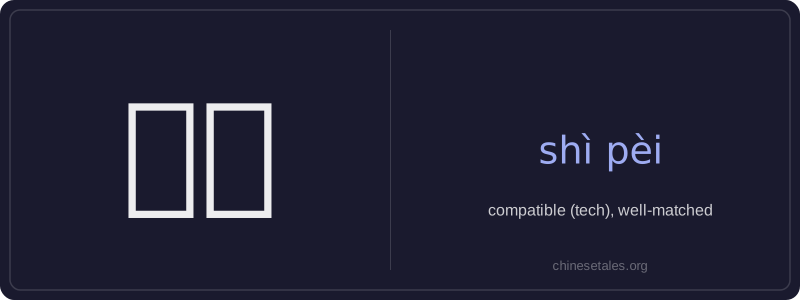
适配 (shì pèi) literally combines 适 (shì, 'suitable' or 'appropriate') and 配 (pèi, 'to match' or 'to pair'), meaning 'compatible' or 'well-matched'. It is most commonly used in technical and functional contexts — especially in computing, electronics, and medical devices — to indicate that two systems, components, or products are designed to work together seamlessly. For example, a software update may be described as 适配 the latest operating system, meaning it has been tested and adjusted to function correctly with it.
Unlike general terms like 合适 (suitable), 适配 emphasizes functional interoperability and deliberate engineering alignment. It’s often used passively (e.g., 已适配) or in compound phrases like 适配器 (adapter) or 系统适配 (system compatibility). While occasionally used metaphorically (e.g., for personality or lifestyle fit), its core usage remains technical and precise, carrying a connotation of intentional, tested compatibility rather than mere suitability.
Example Sentences
Related Words
国语
‘Guó yǔ’ literally means 'national language'—
面条
‘面条’ (miàn tiáo) literally means ‘flour str
无论谁
‘无论谁’ (wú lùn shéi) is a pronoun meaning
不对
不对 (bù duì) literally combines 不 (bù), meani
外语
‘外语’ literally means ‘outside language’ —
认同
‘认同’ (tóng rèn) is a verb meaning ‘to ident
中学
'Zhōngxué' literally combines 'zhōng' (middle)
背后
背后 literally means 'back + behind' and functions