Word Explanation
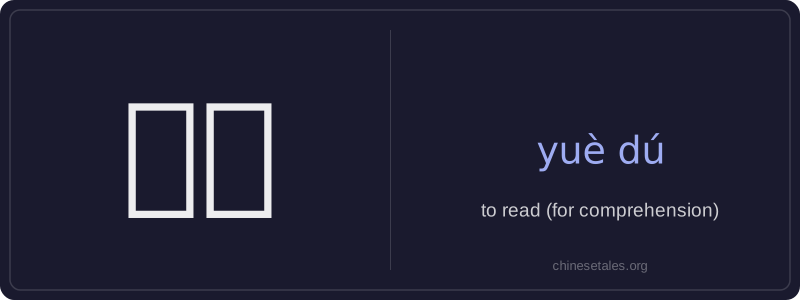
阅读 (yuè dú) means 'to read' with emphasis on understanding and processing written material—not just pronouncing words aloud. It combines 阅 (yuè), meaning 'to examine, review, or peruse', and 读 (dú), meaning 'to read aloud or silently'. Together, they convey the active, thoughtful act of reading for comprehension—such as studying a text, analyzing an article, or absorbing information from books, news, or instructions.
This verb is commonly used in academic, professional, and everyday contexts: students 阅读 textbooks, professionals 阅读 reports, and readers 阅读 novels or online articles. Unlike 看 (kàn, 'to look at'), which is more general, 阅读 specifically implies cognitive engagement with written content. It's often followed by objects like 书 (shū, 'book'), 文章 (wénzhāng, 'article'), or 材料 (cáiliào, 'material'), and frequently appears in formal or educational settings.
Example Sentences
Related Words
国语
‘Guó yǔ’ literally means 'national language'—
面条
‘面条’ (miàn tiáo) literally means ‘flour str
无论谁
‘无论谁’ (wú lùn shéi) is a pronoun meaning
不对
不对 (bù duì) literally combines 不 (bù), meani
外语
‘外语’ literally means ‘outside language’ —
认同
‘认同’ (tóng rèn) is a verb meaning ‘to ident
中学
'Zhōngxué' literally combines 'zhōng' (middle)
背后
背后 literally means 'back + behind' and functions