Word Explanation
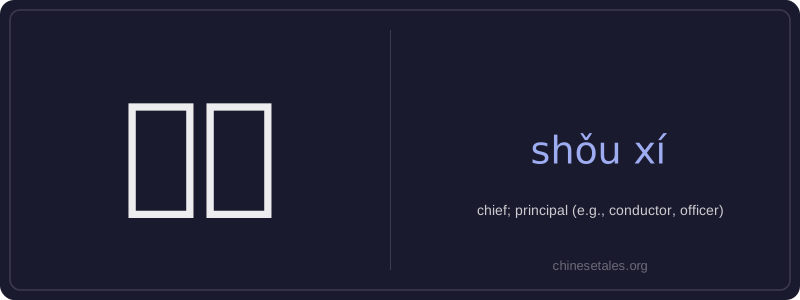
首席 (shǒu xí) literally combines 首 (shǒu), meaning 'head' or 'first', and 席 (xí), originally meaning 'mat' or 'seat'—historically, the most honored seat at a gathering. Together, they form a compound noun meaning 'chief' or 'principal', indicating the highest-ranking person in a professional or organizational role. It is commonly used before titles like conductor, scientist, engineer, or officer to denote top authority or seniority.
This term carries formal, respectful connotations and is frequently seen in institutional, corporate, academic, or artistic contexts—for example, 首席指挥 (chief conductor) or 首席科学家 (chief scientist). Unlike generic terms like 主要 (zhǔyào, 'main'), 首席 implies official designation and hierarchical precedence. It is rarely used alone without a following title and almost never in casual speech.
Example Sentences
Related Words
国语
‘Guó yǔ’ literally means 'national language'—
面条
‘面条’ (miàn tiáo) literally means ‘flour str
无论谁
‘无论谁’ (wú lùn shéi) is a pronoun meaning
不对
不对 (bù duì) literally combines 不 (bù), meani
外语
‘外语’ literally means ‘outside language’ —
认同
‘认同’ (tóng rèn) is a verb meaning ‘to ident
中学
'Zhōngxué' literally combines 'zhōng' (middle)
背后
背后 literally means 'back + behind' and functions