Word Explanation
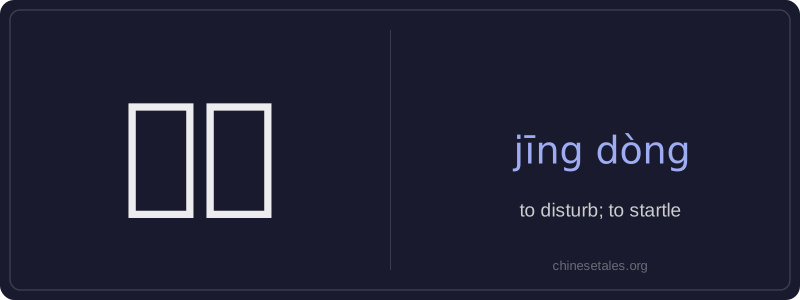
‘惊动’ is a compound verb meaning 'to disturb' or 'to startle' — literally, 'to cause sudden alarm (惊) and movement (动)'. The first character 惊 conveys shock or surprise, often with an emotional or physiological reaction (like a quickened heartbeat); the second, 动, means 'to move' or 'to stir', emphasizing the resulting disruption of stillness or calm. Together, they describe an action that intrudes upon someone’s peace, rest, or routine, causing them to react — whether physically (e.g., waking up) or emotionally (e.g., feeling unsettled).
This word is commonly used in formal or literary contexts, especially when describing unintended disturbance: waking a sleeping person, interrupting quiet work, or alarming animals or people. It carries a mild-to-moderate degree of seriousness — stronger than 打扰 (to bother) but less intense than 震惊 (to shock profoundly). It’s often followed by an object (e.g., 惊动客人) and rarely used intransitively.
Example Sentences
Related Words
国语
‘Guó yǔ’ literally means 'national language'—
面条
‘面条’ (miàn tiáo) literally means ‘flour str
无论谁
‘无论谁’ (wú lùn shéi) is a pronoun meaning
不对
不对 (bù duì) literally combines 不 (bù), meani
外语
‘外语’ literally means ‘outside language’ —
认同
‘认同’ (tóng rèn) is a verb meaning ‘to ident
中学
'Zhōngxué' literally combines 'zhōng' (middle)
背后
背后 literally means 'back + behind' and functions