Word Explanation
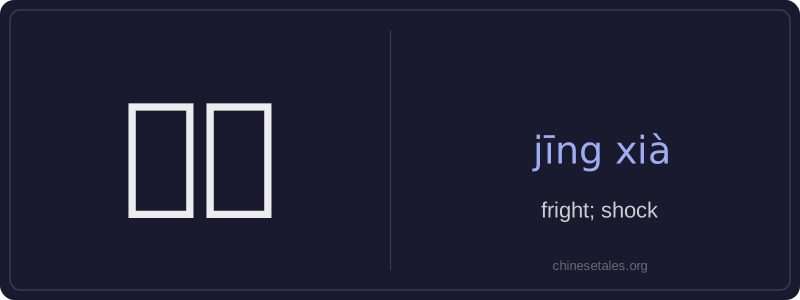
‘惊吓’ is a compound noun meaning ‘fright’ or ‘shock’ — a sudden, intense feeling of fear caused by something unexpected or alarming. The first character 惊 (jīng) means ‘to be startled’ or ‘to feel alarmed’, while the second character 吓 (xià) means ‘to frighten’ or ‘to scare’. Together, they form a noun that emphasizes the emotional state resulting from being frightened — not the act of frightening someone else. It’s commonly used in medical, psychological, and everyday contexts to describe an acute stress reaction.
This word often appears in formal or semi-formal registers — for example, in health reports (e.g., ‘suffered a severe fright’), news accounts of accidents, or parental concerns about children’s reactions to loud noises or sudden events. Unlike the verb 吓 (hè/xià), which can be transitive (‘to scare someone’), 惊吓 functions exclusively as a noun and cannot take objects or be conjugated.
Example Sentences
Related Words
国语
‘Guó yǔ’ literally means 'national language'—
面条
‘面条’ (miàn tiáo) literally means ‘flour str
无论谁
‘无论谁’ (wú lùn shéi) is a pronoun meaning
不对
不对 (bù duì) literally combines 不 (bù), meani
外语
‘外语’ literally means ‘outside language’ —
认同
‘认同’ (tóng rèn) is a verb meaning ‘to ident
中学
'Zhōngxué' literally combines 'zhōng' (middle)
背后
背后 literally means 'back + behind' and functions