Word Explanation
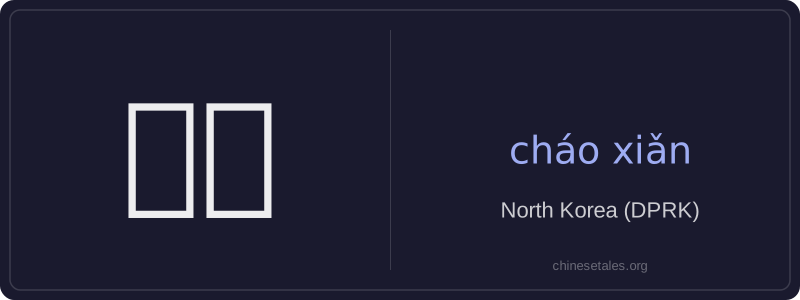
‘朝鲜’ (Cháoxiǎn) is the standard Chinese name for North Korea, officially the Democratic People’s Republic of Korea (DPRK). Though the characters 朝 (cháo) and 鲜 (xiǎn) individually mean ‘dynasty’ or ‘morning’ and ‘fresh’ or ‘bright’, respectively, together they form a historical toponym dating back over two millennia — originally referring to the ancient Korean kingdom of Gojoseon. In modern usage, ‘朝鲜’ exclusively denotes the northern part of the Korean Peninsula and is used in formal, diplomatic, and media contexts.
This term is neutral and widely accepted in mainland China, distinguishing it from ‘韩国’ (Hánguó), which refers to South Korea. It appears frequently in news reports, geographical discussions, and international relations. Unlike colloquial terms, ‘朝鲜’ carries no inherent emotional connotation but may acquire context-specific nuance depending on sentence framing — for example, when paired with words like ‘关系’ (relations) or ‘核问题’ (nuclear issue).
Example Sentences
Related Words
国语
‘Guó yǔ’ literally means 'national language'—
面条
‘面条’ (miàn tiáo) literally means ‘flour str
无论谁
‘无论谁’ (wú lùn shéi) is a pronoun meaning
不对
不对 (bù duì) literally combines 不 (bù), meani
外语
‘外语’ literally means ‘outside language’ —
认同
‘认同’ (tóng rèn) is a verb meaning ‘to ident
中学
'Zhōngxué' literally combines 'zhōng' (middle)
背后
背后 literally means 'back + behind' and functions