Word Explanation
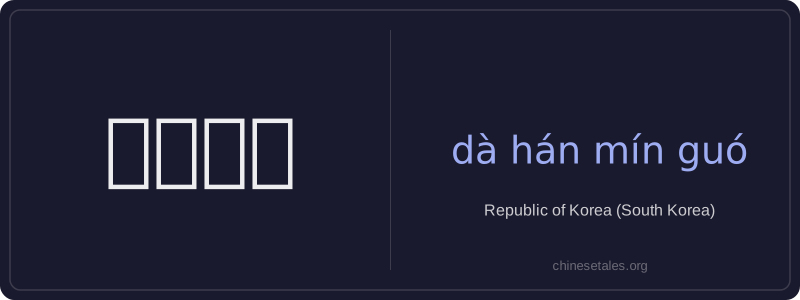
‘Dà Hán Mín Guó’ (Republic of Korea) is the formal official name for South Korea. Each character contributes meaning: ‘dà’ means ‘great’ or ‘grand’, ‘hán’ refers to the ancient Korean tribal confederacies and later became a poetic name for Korea, ‘mín’ means ‘people’ or ‘civil’, and ‘guó’ means ‘country’ or ‘state’. Together, the term literally conveys ‘The Great People’s State of Han’ — reflecting historical identity and modern constitutional governance.
This term is used in formal, diplomatic, legal, and academic contexts — such as official documents, news broadcasts, international treaties, and educational materials. It is not used colloquially in everyday speech; native speakers typically say ‘Hánguó’ (韩国) in casual conversation. The full name distinguishes South Korea from North Korea (Cháoxiǎn or Běihán), especially in contexts requiring precision, like UN proceedings or historical analysis.
Example Sentences
Related Words
国语
‘Guó yǔ’ literally means 'national language'—
面条
‘面条’ (miàn tiáo) literally means ‘flour str
无论谁
‘无论谁’ (wú lùn shéi) is a pronoun meaning
不对
不对 (bù duì) literally combines 不 (bù), meani
外语
‘外语’ literally means ‘outside language’ —
认同
‘认同’ (tóng rèn) is a verb meaning ‘to ident
中学
'Zhōngxué' literally combines 'zhōng' (middle)
背后
背后 literally means 'back + behind' and functions