Word Explanation
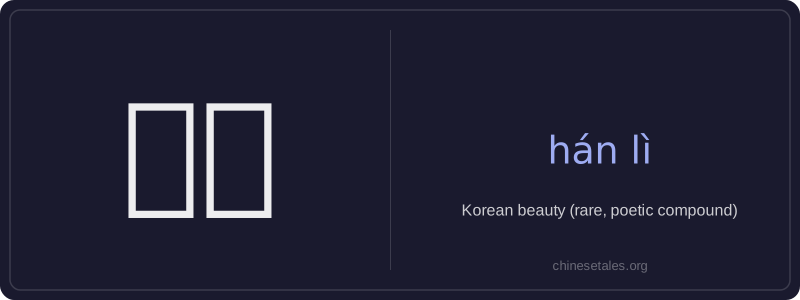
‘韩丽’ is a rare, literary compound meaning ‘Korean beauty’ — not a personal name, but a poetic or descriptive term evoking the elegance and grace associated with traditional Korean aesthetics. The character 韩 (hán) historically refers to Korea (as in ‘Han Dynasty’-influenced cultural spheres or modern usage for Korea), while 丽 (lì) means ‘beautiful’, ‘lovely’, or ‘radiant’. Together, they form a two-character noun that emphasizes aesthetic refinement rather than nationality alone.
This term appears almost exclusively in classical poetry, art criticism, or lyrical prose — never in casual speech or modern media. It carries a gentle, somewhat nostalgic tone and may describe a person’s bearing, a landscape’s harmony, or even the delicate appearance of certain flowers or textiles inspired by Korean tradition. Because it is archaic and stylistically elevated, learners should recognize it primarily in reading contexts, not as a word to produce spontaneously.
Example Sentences
Related Words
国语
‘Guó yǔ’ literally means 'national language'—
面条
‘面条’ (miàn tiáo) literally means ‘flour str
无论谁
‘无论谁’ (wú lùn shéi) is a pronoun meaning
不对
不对 (bù duì) literally combines 不 (bù), meani
外语
‘外语’ literally means ‘outside language’ —
认同
‘认同’ (tóng rèn) is a verb meaning ‘to ident
中学
'Zhōngxué' literally combines 'zhōng' (middle)
背后
背后 literally means 'back + behind' and functions