Word Explanation
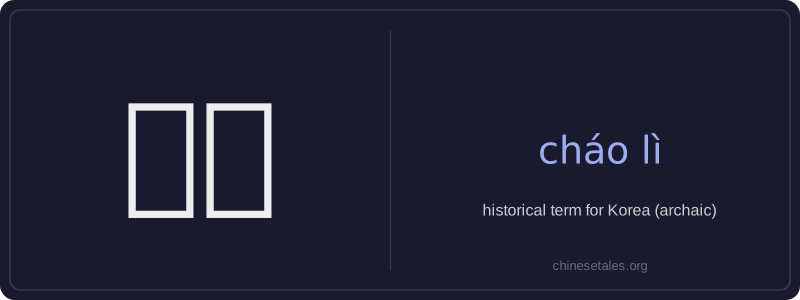
‘朝丽’ (cháo lì) is an archaic Chinese term historically used to refer to Korea, especially during the Ming and Qing dynasties. The character 朝 (cháo) here is not the common reading ‘zhāo’ (meaning ‘morning’), but the less frequent reading ‘cháo’, which in this compound evokes ‘dynasty’ or ‘court’—a reference to Korea’s status as a tributary state of imperial China. 丽 (lì) is short for 高丽 (Gāolì), the Chinese name for the Goryeo dynasty (918–1392), which gave rise to the modern English word ‘Korea’. Together, 朝丽 functions as a literary, formal synonym for Korea in classical texts, historical documents, or poetic contexts.
This term is rarely used in modern spoken or written Chinese; contemporary standard usage prefers 韩国 (Hánguó) for South Korea or 朝鲜 (Cháoxiǎn) for North Korea. Learners should recognize 朝丽 primarily in historical readings—not in daily conversation—and be careful not to confuse it with the homophone 朝鲜 (Cháoxiǎn), which specifically denotes North Korea or the Joseon dynasty.
Example Sentences
Related Words
国语
‘Guó yǔ’ literally means 'national language'—
面条
‘面条’ (miàn tiáo) literally means ‘flour str
无论谁
‘无论谁’ (wú lùn shéi) is a pronoun meaning
不对
不对 (bù duì) literally combines 不 (bù), meani
外语
‘外语’ literally means ‘outside language’ —
认同
‘认同’ (tóng rèn) is a verb meaning ‘to ident
中学
'Zhōngxué' literally combines 'zhōng' (middle)
背后
背后 literally means 'back + behind' and functions