Word Explanation
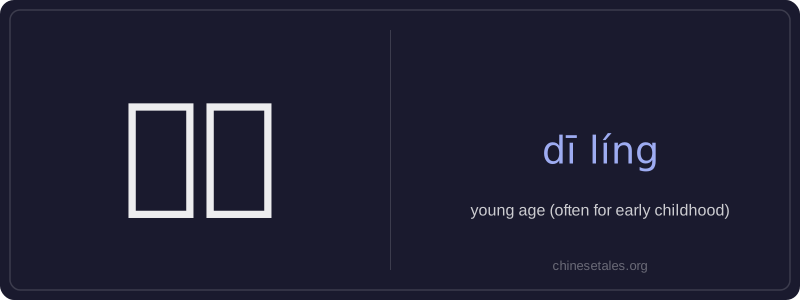
‘低龄’ literally combines ‘low’ (低 dī) and ‘age’ (龄 líng), meaning ‘young age’—typically referring to early childhood, especially in contexts like education, healthcare, or development. It’s not used for general youth (e.g., teenagers), but specifically for very young children, often under six or seven years old. The term carries a formal, descriptive tone and frequently appears in official reports, medical guidelines, or policy discussions about early intervention, vaccination schedules, or preschool education.
Unlike standalone words like ‘小孩’ (xiǎo hái, ‘child’) or ‘幼儿’ (yòu ér, ‘toddler’), ‘低龄’ functions almost exclusively as a modifier—it usually precedes nouns such as ‘儿童’ (tóng’ér, ‘children’), ‘段’ (duàn, ‘stage’), or ‘人群’ (rénqún, ‘population group’). It implies vulnerability, developmental sensitivity, or special needs tied to immaturity, making it common in public health and pedagogy discourse.
Example Sentences
Related Words
国语
‘Guó yǔ’ literally means 'national language'—
面条
‘面条’ (miàn tiáo) literally means ‘flour str
无论谁
‘无论谁’ (wú lùn shéi) is a pronoun meaning
不对
不对 (bù duì) literally combines 不 (bù), meani
外语
‘外语’ literally means ‘outside language’ —
认同
‘认同’ (tóng rèn) is a verb meaning ‘to ident
中学
'Zhōngxué' literally combines 'zhōng' (middle)
背后
背后 literally means 'back + behind' and functions