Word Explanation
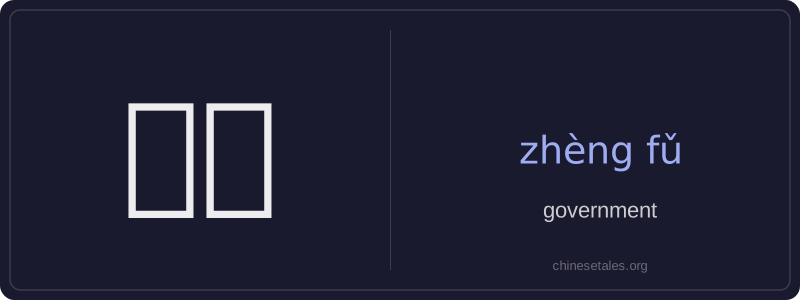
政府 (zhèng fǔ) literally means 'administration office' — 政 (zhèng) means 'politics' or 'governance', and 府 (fǔ) historically refers to an official residence or administrative office, like a magistrate's yamen. Together, they form the standard modern term for 'government' — the official body that administers a country, region, or locality. It’s a neutral, formal noun used in news, policy discussions, and everyday contexts when referring to state institutions.
The word applies broadly: national government (中央政府), provincial government (省政府), municipal government (市政府), or even local government (地方政府). Unlike English, where 'government' can sometimes imply political parties or ruling groups, 政府 in Chinese emphasizes institutional function rather than partisan identity — it’s about administration, public services, and law enforcement, not ideology alone.
Example Sentences
Related Words
国语
‘Guó yǔ’ literally means 'national language'—
面条
‘面条’ (miàn tiáo) literally means ‘flour str
无论谁
‘无论谁’ (wú lùn shéi) is a pronoun meaning
不对
不对 (bù duì) literally combines 不 (bù), meani
外语
‘外语’ literally means ‘outside language’ —
认同
‘认同’ (tóng rèn) is a verb meaning ‘to ident
中学
'Zhōngxué' literally combines 'zhōng' (middle)
背后
背后 literally means 'back + behind' and functions