Word Explanation
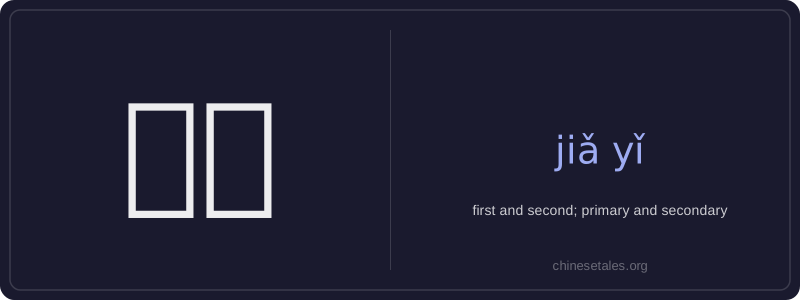
甲乙 (jiǎ yǐ) literally refers to the first two of the Ten Heavenly Stems (天干), an ancient Chinese system used for counting, dating, and categorizing. While originally part of a cyclical sequence (甲、乙、丙、丁…), 甲乙 has evolved into a fixed idiomatic expression meaning 'first and second' or 'primary and secondary'—often implying hierarchy, order, or relative importance rather than literal numbering.
This term is commonly used in formal, written, or academic contexts—for example, when ranking items, comparing priorities, or distinguishing main from supporting elements. It carries a classical, slightly literary tone and is rarely used in casual speech. Unlike simple numerals like 第一和第二, 甲乙 conveys nuance: it suggests structural or conceptual precedence, not just sequence. It appears frequently in legal texts, educational materials, and discussions of methodology or classification.
Example Sentences
Related Words
国语
‘Guó yǔ’ literally means 'national language'—
面条
‘面条’ (miàn tiáo) literally means ‘flour str
无论谁
‘无论谁’ (wú lùn shéi) is a pronoun meaning
不对
不对 (bù duì) literally combines 不 (bù), meani
外语
‘外语’ literally means ‘outside language’ —
认同
‘认同’ (tóng rèn) is a verb meaning ‘to ident
中学
'Zhōngxué' literally combines 'zhōng' (middle)
背后
背后 literally means 'back + behind' and functions