Word Explanation
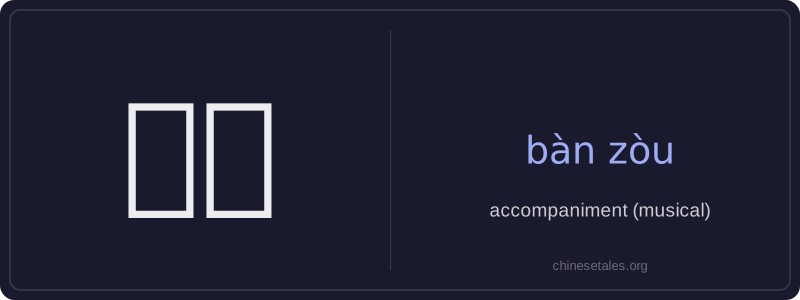
'伴奏' (bàn zòu) literally combines '伴' (bàn), meaning 'to accompany' or 'companion', and '奏' (zòu), meaning 'to play (music)' or 'to perform'. Together, they form a noun meaning 'musical accompaniment' — the supporting music that enhances or supports a main melody, vocal line, or solo instrument. It is commonly used in both classical and popular music contexts, referring to either the act of accompanying or the accompanying part itself.
This word appears frequently in descriptions of performances, rehearsals, recordings, and music education. While '伴奏' can be used as a noun ('the accompaniment') or a verb ('to accompany'), its most common and natural usage is as a noun. It is neutral in register and appropriate in formal and informal settings — for example, when discussing piano accompaniment for a singer, orchestral backing for a violinist, or digital backing tracks for practice.
Example Sentences
Related Words
国语
‘Guó yǔ’ literally means 'national language'—
面条
‘面条’ (miàn tiáo) literally means ‘flour str
无论谁
‘无论谁’ (wú lùn shéi) is a pronoun meaning
不对
不对 (bù duì) literally combines 不 (bù), meani
外语
‘外语’ literally means ‘outside language’ —
认同
‘认同’ (tóng rèn) is a verb meaning ‘to ident
中学
'Zhōngxué' literally combines 'zhōng' (middle)
背后
背后 literally means 'back + behind' and functions