Word Explanation
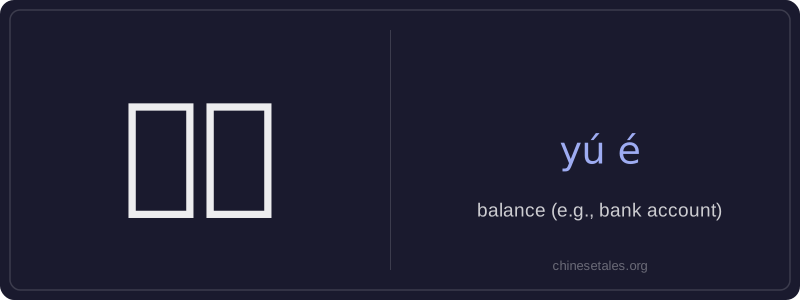
余额 (yú é) literally means 'remaining amount' — 余 (yú) means 'remaining' or 'leftover', and 额 (é) means 'amount', 'quota', or 'fixed sum'. Together, they refer specifically to the remaining balance in a financial context, such as in a bank account, e-wallet, or prepaid card. It is a formal, neutral term commonly used in banking, finance, and everyday digital payment platforms like Alipay or WeChat Pay.
This word is not used for physical quantities (e.g., leftover food) — for those, you’d use 剩余 (shèngyú) or 剩下 (shèngxià). 余额 appears almost exclusively with numbers or quantifiers (e.g., 账户余额, 信用卡余额) and rarely stands alone without a modifier. It carries no emotional connotation and is appropriate in both written and spoken registers, though it’s more frequent in official or transactional communication than casual conversation.
Example Sentences
Related Words
国语
‘Guó yǔ’ literally means 'national language'—
面条
‘面条’ (miàn tiáo) literally means ‘flour str
无论谁
‘无论谁’ (wú lùn shéi) is a pronoun meaning
不对
不对 (bù duì) literally combines 不 (bù), meani
外语
‘外语’ literally means ‘outside language’ —
认同
‘认同’ (tóng rèn) is a verb meaning ‘to ident
中学
'Zhōngxué' literally combines 'zhōng' (middle)
背后
背后 literally means 'back + behind' and functions