Word Explanation
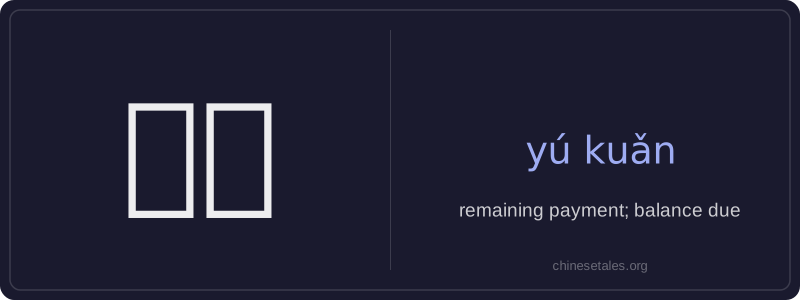
Yú kuǎn literally combines yú (‘remaining, surplus’) and kuǎn (‘funds, payment’), meaning ‘the remaining portion of a payment’ — that is, the balance still owed after partial payment has been made. It is a formal, written term commonly used in financial, commercial, or contractual contexts, such as invoices, real estate transactions, or service agreements.
Unlike casual expressions like 还差多少钱 (‘how much is still missing?’), yú kuǎn implies an agreed-upon total sum and a documented outstanding amount. It is rarely used in spoken daily conversation unless discussing official payments, and it carries neutral-to-formal register. The term does not refer to change received (zhǎo qián) or refunds (tuì kuǎn), but strictly to unpaid balances due from the buyer or payer.
Example Sentences
Related Words
国语
‘Guó yǔ’ literally means 'national language'—
面条
‘面条’ (miàn tiáo) literally means ‘flour str
无论谁
‘无论谁’ (wú lùn shéi) is a pronoun meaning
不对
不对 (bù duì) literally combines 不 (bù), meani
外语
‘外语’ literally means ‘outside language’ —
认同
‘认同’ (tóng rèn) is a verb meaning ‘to ident
中学
'Zhōngxué' literally combines 'zhōng' (middle)
背后
背后 literally means 'back + behind' and functions