Word Explanation
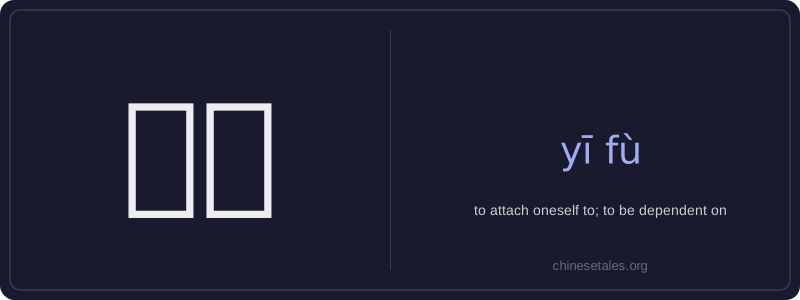
‘依附’ is a compound verb meaning ‘to attach oneself to’ or ‘to be dependent on’—often implying an unequal, one-sided reliance where one party gains support, protection, or advantage from another. The character 依 (yī) conveys leaning on, relying upon, or following closely; 附 (fù) means to attach, join, or adhere—like a parasite clinging to a host. Together, they evoke a vivid image of physical or metaphorical attachment, frequently used in biological contexts (e.g., symbiosis or parasitism) and social critiques (e.g., people depending uncritically on authority or wealth).
In modern usage, ‘依附’ often carries a slightly negative or cautionary tone, suggesting loss of autonomy or unhealthy dependence—not mere cooperation or mutual support. It’s common in discussions about ecological relationships (e.g., epiphytic plants or commensal animals), as well as sociopolitical commentary about ideological or economic dependency. Unlike neutral terms like ‘合作’ (cooperate), ‘依附’ emphasizes asymmetry and passivity on the part of the dependent party.
Example Sentences
Related Words
国语
‘Guó yǔ’ literally means 'national language'—
面条
‘面条’ (miàn tiáo) literally means ‘flour str
无论谁
‘无论谁’ (wú lùn shéi) is a pronoun meaning
不对
不对 (bù duì) literally combines 不 (bù), meani
外语
‘外语’ literally means ‘outside language’ —
认同
‘认同’ (tóng rèn) is a verb meaning ‘to ident
中学
'Zhōngxué' literally combines 'zhōng' (middle)
背后
背后 literally means 'back + behind' and functions