Word Explanation
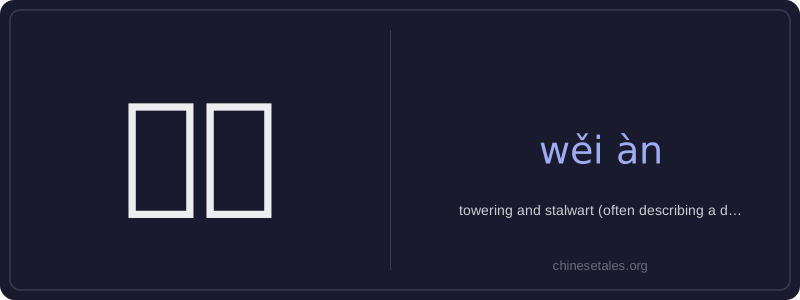
‘伟岸’ is an elegant, literary adjective used primarily to describe a person—usually a man—who possesses both physical stature and moral grandeur: tall, broad-shouldered, and dignified in bearing. The character 伟 (wěi) means 'great' or 'magnificent', often implying moral excellence or heroic stature; 岸 (àn) literally means 'shore' or 'bank', but here evokes the image of a firm, upright, unyielding cliff—suggesting steadfastness, strength, and noble composure. Together, they form a compound that transcends mere height, emphasizing an imposing yet admirable presence rooted in integrity and quiet confidence.
This word appears frequently in formal writing, biographies, descriptive essays, and poetic narration—but rarely in casual speech. It carries a respectful, even reverent tone and is often applied to figures like national heroes, revered elders, or literary protagonists embodying resilience and virtue. While originally tied to male physicality, modern usage sometimes extends metaphorically to institutions or ideals that project unwavering strength and principled authority.
Example Sentences
Related Words
国语
‘Guó yǔ’ literally means 'national language'—
面条
‘面条’ (miàn tiáo) literally means ‘flour str
无论谁
‘无论谁’ (wú lùn shéi) is a pronoun meaning
不对
不对 (bù duì) literally combines 不 (bù), meani
外语
‘外语’ literally means ‘outside language’ —
认同
‘认同’ (tóng rèn) is a verb meaning ‘to ident
中学
'Zhōngxué' literally combines 'zhōng' (middle)
背后
背后 literally means 'back + behind' and functions