Word Explanation
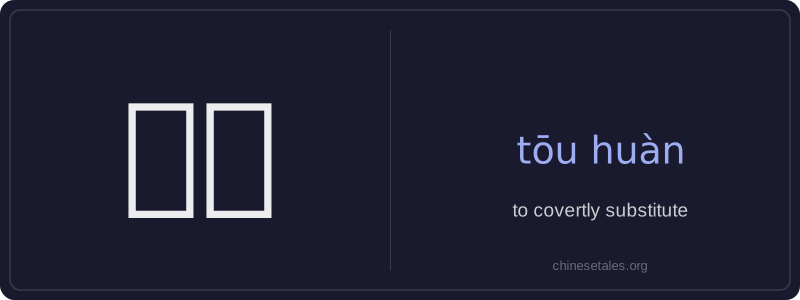
'偷换' (tōu huàn) is a verb meaning 'to covertly substitute' — that is, to secretly replace one thing with another, usually without permission and often with deceptive intent. The first character 偷 (tōu) means 'to steal' or 'to do secretly', emphasizing stealth and concealment; the second character 换 (huàn) means 'to exchange' or 'to replace'. Together, they form a compound that highlights the clandestine nature of the substitution — not just swapping, but doing so underhandedly, often to mislead, cheat, or gain unfair advantage.
This word commonly appears in contexts involving fraud, deception, or ethical breaches — such as tampering with evidence, swapping products in retail, or altering documents. It carries a strong negative connotation and implies intentional wrongdoing. While it can describe physical acts (e.g., switching goods), it’s also used figuratively, like 'stealthily substituting concepts' in arguments. It’s more formal and critical than casual synonyms like '换' (huàn) alone, and is rarely used in neutral or positive settings.
Example Sentences
Related Words
国语
‘Guó yǔ’ literally means 'national language'—
面条
‘面条’ (miàn tiáo) literally means ‘flour str
无论谁
‘无论谁’ (wú lùn shéi) is a pronoun meaning
不对
不对 (bù duì) literally combines 不 (bù), meani
外语
‘外语’ literally means ‘outside language’ —
认同
‘认同’ (tóng rèn) is a verb meaning ‘to ident
中学
'Zhōngxué' literally combines 'zhōng' (middle)
背后
背后 literally means 'back + behind' and functions