Word Explanation
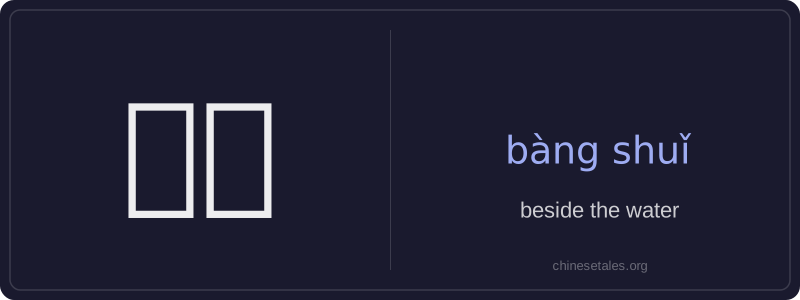
'Bàng shuǐ' literally means 'beside the water' and functions as a noun phrase describing a location adjacent to a body of water—such as a river, lake, or sea. The character 傍 (bàng) means 'beside' or 'next to', while 水 (shuǐ) means 'water'. Together, they form a compact locative expression often used in descriptive, literary, or geographical contexts.
This term appears frequently in place names, poetry, travel writing, and ecological descriptions—for example, to refer to villages, parks, or habitats situated along waterways. Unlike the more general prepositional phrase 在水边 (zài shuǐ biān), 傍水 carries a slightly refined or poetic nuance and is rarely used in casual spoken Chinese. It may also appear in compound nouns like 傍水村落 (bàng shuǐ cūnluò, 'riverside village') or 傍水步道 (bàng shuǐ bùdào, 'lakeside walking path').
Example Sentences
Related Words
国语
‘Guó yǔ’ literally means 'national language'—
面条
‘面条’ (miàn tiáo) literally means ‘flour str
无论谁
‘无论谁’ (wú lùn shéi) is a pronoun meaning
不对
不对 (bù duì) literally combines 不 (bù), meani
外语
‘外语’ literally means ‘outside language’ —
认同
‘认同’ (tóng rèn) is a verb meaning ‘to ident
中学
'Zhōngxué' literally combines 'zhōng' (middle)
背后
背后 literally means 'back + behind' and functions