Word Explanation
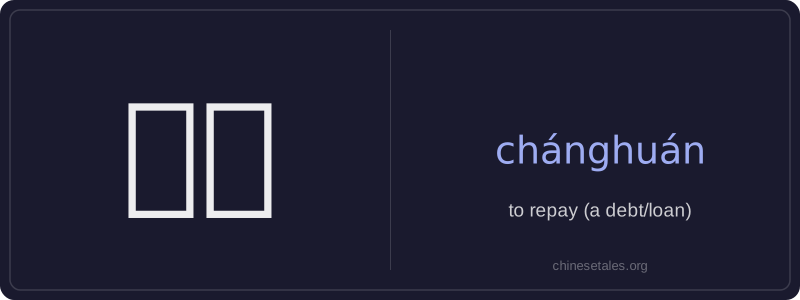
"Chánghuán" is a verb meaning "to repay"—typically a debt, loan, or obligation. The first character 偿 (cháng) carries the core meaning of "to compensate" or "to make amends," while the second character 还 (huán) means "to return" or "to give back." Together, they emphasize the act of fulfilling a financial or moral duty by returning what was borrowed or owed. It’s commonly used in formal, written, or official contexts—such as banking, legal documents, or serious discussions about responsibility—and is rarely used for casual favors or small personal loans.
The word implies completeness and seriousness: repaying a debt fully and on time. It often appears with objects like 钱 (money), 贷款 (loan), 债务 (debt), or 欠款 (amount owed). Unlike colloquial alternatives like 还钱 (huán qián), 偿还 sounds more solemn and institutional, making it appropriate in news reports, contracts, or academic writing about economics or ethics.
Example Sentences
Related Words
国语
‘Guó yǔ’ literally means 'national language'—
面条
‘面条’ (miàn tiáo) literally means ‘flour str
无论谁
‘无论谁’ (wú lùn shéi) is a pronoun meaning
不对
不对 (bù duì) literally combines 不 (bù), meani
外语
‘外语’ literally means ‘outside language’ —
认同
‘认同’ (tóng rèn) is a verb meaning ‘to ident
中学
'Zhōngxué' literally combines 'zhōng' (middle)
背后
背后 literally means 'back + behind' and functions