Word Explanation
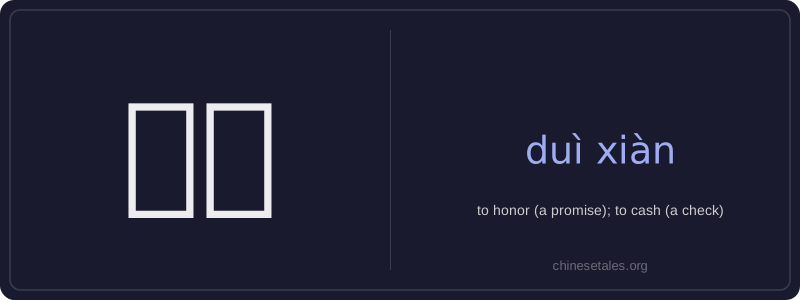
‘兑现’ is a verb meaning to fulfill or honor a promise, commitment, or obligation — for example, delivering on something previously pledged. It can also mean to cash or redeem a financial instrument like a check, voucher, or coupon. The character 兑 originally relates to exchange or settlement (as in ancient barter), while 现 means ‘present’ or ‘cash,’ suggesting the act of making something real or tangible *now*. Together, they convey the idea of turning a verbal or written commitment into concrete action or value.
This word is commonly used in both formal and everyday contexts: politicians ‘兑现承诺’ (honor promises), companies ‘兑现服务’ (deliver on service guarantees), and individuals ‘兑现支票’ (cash a check). It carries a strong connotation of reliability and accountability — failing to 兑现 often implies broken trust. Though it can appear in financial settings, its broader use in social and moral contexts makes it especially important for expressing integrity in Chinese communication.
Example Sentences
Related Words
国语
‘Guó yǔ’ literally means 'national language'—
面条
‘面条’ (miàn tiáo) literally means ‘flour str
无论谁
‘无论谁’ (wú lùn shéi) is a pronoun meaning
不对
不对 (bù duì) literally combines 不 (bù), meani
外语
‘外语’ literally means ‘outside language’ —
认同
‘认同’ (tóng rèn) is a verb meaning ‘to ident
中学
'Zhōngxué' literally combines 'zhōng' (middle)
背后
背后 literally means 'back + behind' and functions