Word Explanation
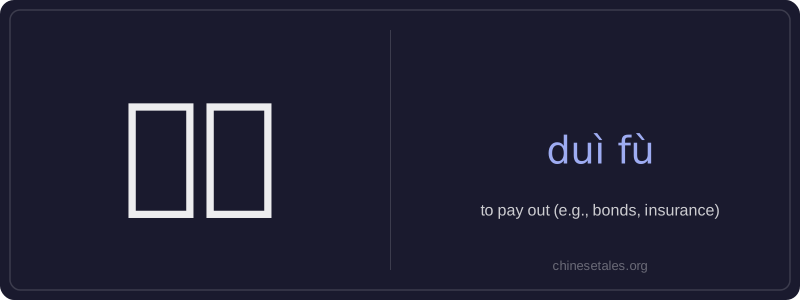
‘兑付’ (duì fù) is a formal financial verb meaning ‘to pay out’ or ‘to honor a payment obligation’—typically used when an institution fulfills its commitment to disburse money, such as redeeming bonds, settling insurance claims, or cashing checks or vouchers. The character 兑 (duì) originally meant ‘exchange’ or ‘convert’, and 付 (fù) means ‘to pay’ or ‘to deliver’. Together, they convey the idea of converting a claim or instrument into actual cash or value.
This term appears almost exclusively in official, legal, or financial contexts—not in everyday conversation. You’ll see it in banking notices, insurance policies, government announcements about bond maturities, or financial news reporting on debt repayment. It carries a sense of formality, obligation, and institutional responsibility, and is rarely used for casual personal payments like handing cash to a friend.
Example Sentences
Related Words
国语
‘Guó yǔ’ literally means 'national language'—
面条
‘面条’ (miàn tiáo) literally means ‘flour str
无论谁
‘无论谁’ (wú lùn shéi) is a pronoun meaning
不对
不对 (bù duì) literally combines 不 (bù), meani
外语
‘外语’ literally means ‘outside language’ —
认同
‘认同’ (tóng rèn) is a verb meaning ‘to ident
中学
'Zhōngxué' literally combines 'zhōng' (middle)
背后
背后 literally means 'back + behind' and functions