Word Explanation
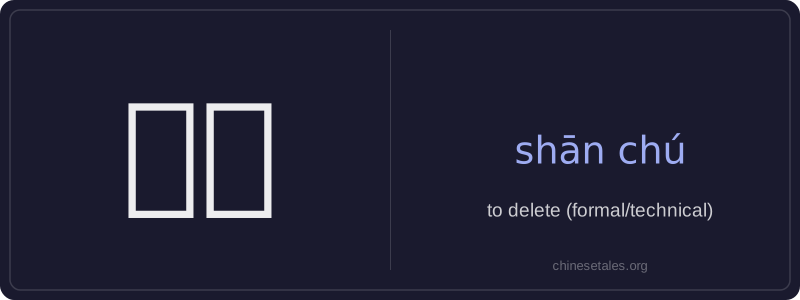
删除 (shān chú) is a formal, transitive verb meaning 'to delete' — to remove data, files, text, or entries permanently from a digital system or written record. The character 删 means 'to strike out or erase', often used for crossing out text; 除 means 'to remove or eliminate', carrying a sense of thorough removal. Together, they form a compound emphasizing intentional, complete deletion—common in computing, document editing, and administrative contexts.
This word is standard in technical manuals, software interfaces (e.g., '删除文件'), and formal instructions. It is not used for casual or temporary removal (e.g., hiding or archiving), nor for physical objects like trash — for those, words like 扔掉 (throw away) or 清除 (clear/erase) are more appropriate. It implies irreversibility unless a recycle bin or undo function is present, but the act itself is definitive.
Example Sentences
Related Words
国语
‘Guó yǔ’ literally means 'national language'—
无论谁
‘无论谁’ (wú lùn shéi) is a pronoun meaning
面条
‘面条’ (miàn tiáo) literally means ‘flour str
外语
‘外语’ literally means ‘outside language’ —
不对
不对 (bù duì) literally combines 不 (bù), meani
认同
‘认同’ (tóng rèn) is a verb meaning ‘to ident
中学
'Zhōngxué' literally combines 'zhōng' (middle)
背后
背后 literally means 'back + behind' and functions