Word Explanation
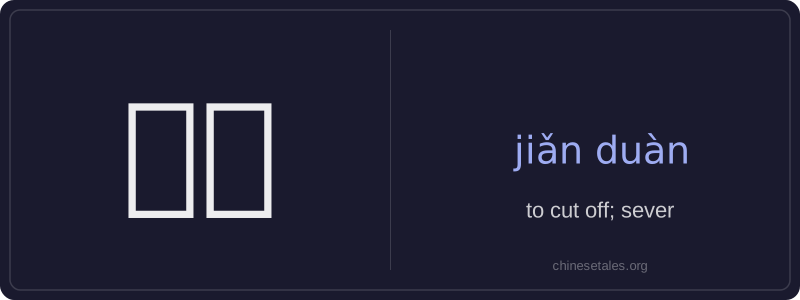
‘剪断’ is a compound verb meaning 'to cut off' or 'to sever', formed by combining 剪 (jiǎn, 'to cut with scissors') and 断 (duàn, 'to break, to sever'). Together, they emphasize the deliberate, clean separation of something using cutting tools—especially scissors or shears. It implies completeness: once cut, the connection is fully broken.
This verb is commonly used in contexts involving physical objects like ropes, wires, threads, or biological tissues—for example, in veterinary care when trimming umbilical cords or removing entangled fur. It can also appear metaphorically (e.g., 'cutting ties'), though literal usage dominates. Unlike generic verbs like 切 (qiē), 剪断 specifically evokes scissor-like action and precision. It’s neutral in register and frequently appears in instructions, medical reports, and daily descriptions of manual tasks.
Example Sentences
Related Words
国语
‘Guó yǔ’ literally means 'national language'—
无论谁
‘无论谁’ (wú lùn shéi) is a pronoun meaning
面条
‘面条’ (miàn tiáo) literally means ‘flour str
外语
‘外语’ literally means ‘outside language’ —
不对
不对 (bù duì) literally combines 不 (bù), meani
认同
‘认同’ (tóng rèn) is a verb meaning ‘to ident
中学
'Zhōngxué' literally combines 'zhōng' (middle)
背后
背后 literally means 'back + behind' and functions