Word Explanation
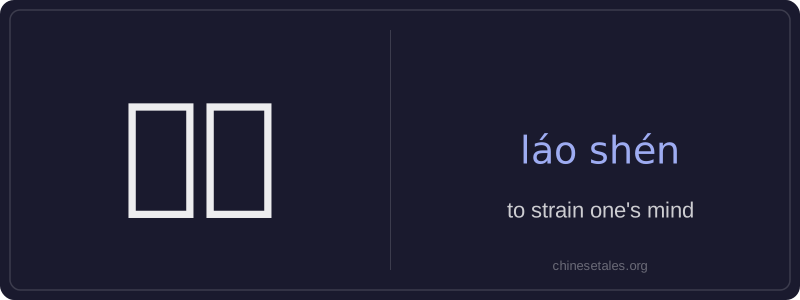
劳神 literally combines 劳 (láo, 'to toil' or 'to strain') and 神 (shén, 'spirit' or 'mind'), meaning 'to strain one's mind' or 'to rack one's brain.' It emphasizes mental exhaustion from overthinking, excessive worry, or prolonged concentration — not physical labor. The word carries a slightly negative or cautionary tone, often implying that the mental effort is unnecessary, unproductive, or harmful to one’s well-being.
This term is commonly used in advice-giving contexts ('Don’t劳神over small things'), health discussions about stress management, or self-reflection ('I’ve been劳神too much lately'). It frequently appears with negation (别劳神, 不必劳神) or as part of set phrases like 劳神费心 (láo shén fèi xīn, 'to trouble oneself unnecessarily'). Unlike generic verbs for 'think' (e.g., 想), 劳神 specifically conveys mental fatigue and emotional cost.
Example Sentences
Related Words
国语
‘Guó yǔ’ literally means 'national language'—
无论谁
‘无论谁’ (wú lùn shéi) is a pronoun meaning
面条
‘面条’ (miàn tiáo) literally means ‘flour str
外语
‘外语’ literally means ‘outside language’ —
不对
不对 (bù duì) literally combines 不 (bù), meani
认为
‘认为’ (rèn wéi) is a transitive verb meaning
认同
‘认同’ (tóng rèn) is a verb meaning ‘to ident
中学
'Zhōngxué' literally combines 'zhōng' (middle)