Word Explanation
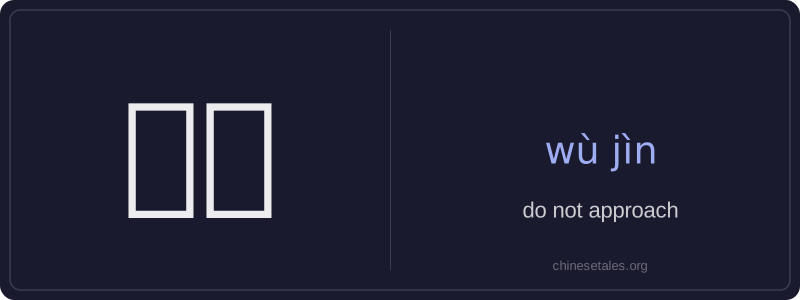
'勿近' is a concise, formal command meaning 'do not approach' or 'keep away from.' The character 勿 (wù) is a classical negative particle meaning 'do not' or 'must not,' often used in prohibitions; 近 (jìn) means 'to approach,' 'to come near,' or 'close to.' Together, they form an imperative phrase emphasizing caution or danger — typically found on warning signs, safety instructions, or official notices rather than casual speech.
This phrase is commonly seen in contexts involving potential hazards: wild animals, hazardous materials, construction zones, or protected natural areas. Its tone is authoritative and urgent, reflecting seriousness and immediacy. While grammatically similar to modern Mandarin verbs like '别靠近' (bié kàojìn), '勿近' carries a more literary, official, or bureaucratic register — you’ll rarely hear it in conversation, but frequently see it printed on signs or in public announcements.
Example Sentences
Related Words
国语
‘Guó yǔ’ literally means 'national language'—
无论谁
‘无论谁’ (wú lùn shéi) is a pronoun meaning
面条
‘面条’ (miàn tiáo) literally means ‘flour str
外语
‘外语’ literally means ‘outside language’ —
不对
不对 (bù duì) literally combines 不 (bù), meani
认为
‘认为’ (rèn wéi) is a transitive verb meaning
认同
‘认同’ (tóng rèn) is a verb meaning ‘to ident
中学
'Zhōngxué' literally combines 'zhōng' (middle)