Word Explanation
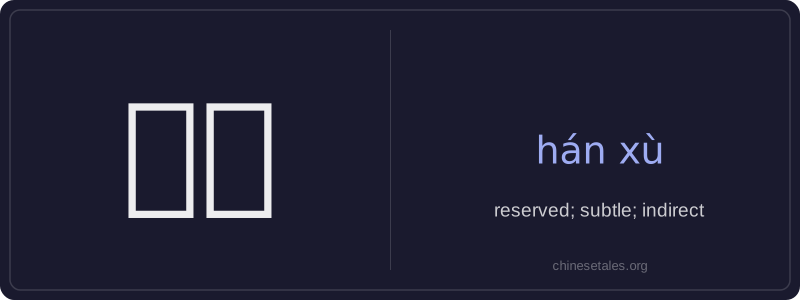
含蓄 (hán xù) is an adjective describing communication or expression that is restrained, subtle, and indirect — avoiding overt statements or strong displays. The character 含 means 'to contain' or 'to hold within,' while 蓄 means 'to store up' or 'to accumulate.' Together, they evoke the image of holding meaning inside, like emotions or intentions kept unspoken but perceptible beneath the surface. It’s commonly used to describe speech, writing, art, or behavior that conveys depth without explicitness — for example, a poem with layered meanings or a person who gives gentle, tactful feedback instead of blunt criticism.
This word carries positive cultural connotations in Chinese, associated with refinement, modesty, and emotional intelligence. It contrasts sharply with directness or bluntness (e.g., 直率 zhí shuài), and is especially valued in interpersonal contexts where saving face and maintaining harmony matter. While it can occasionally describe physical qualities (e.g., a muted color), its core usage centers on human expression and social nuance.
Example Sentences
Related Words
国语
‘Guó yǔ’ literally means 'national language'—
无论谁
‘无论谁’ (wú lùn shéi) is a pronoun meaning
外语
‘外语’ literally means ‘outside language’ —
面条
‘面条’ (miàn tiáo) literally means ‘flour str
不对
不对 (bù duì) literally combines 不 (bù), meani
认为
‘认为’ (rèn wéi) is a transitive verb meaning
认同
‘认同’ (tóng rèn) is a verb meaning ‘to ident
中学
'Zhōngxué' literally combines 'zhōng' (middle)