Word Explanation
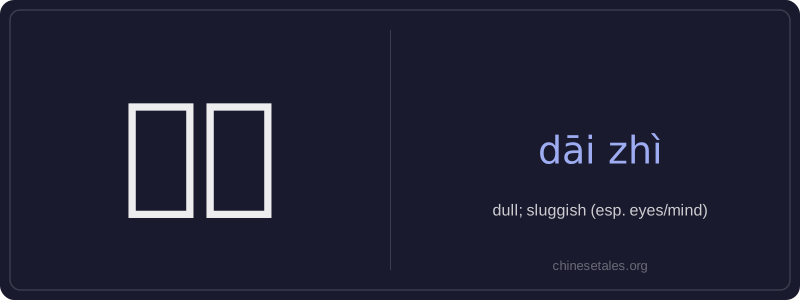
呆滞 (dāi zhì) is an adjective describing a lack of liveliness or responsiveness, especially in the eyes or mind. The first character 呆 means 'dull' or 'stupid', evoking blankness or mental inertia; the second character 滞 means 'stagnant' or 'sluggish', suggesting something stuck or unmoving. Together, they form a compound that vividly conveys a state of mental dullness, vacant staring, or slow cognitive processing — often with a slightly negative or concerning connotation.
This word is commonly used to describe facial expressions (e.g., someone’s eyes appearing lifeless), mental states (e.g., slowed thinking after illness or shock), or even economic conditions (e.g., stagnant markets). It frequently appears in medical, psychological, and literary contexts, but rarely in casual speech among friends — it carries subtle gravity and implies something is not functioning normally.
Example Sentences
Related Words
国语
‘Guó yǔ’ literally means 'national language'—
无论谁
‘无论谁’ (wú lùn shéi) is a pronoun meaning
外语
‘外语’ literally means ‘outside language’ —
面条
‘面条’ (miàn tiáo) literally means ‘flour str
不对
不对 (bù duì) literally combines 不 (bù), meani
认为
‘认为’ (rèn wéi) is a transitive verb meaning
认同
‘认同’ (tóng rèn) is a verb meaning ‘to ident
中学
'Zhōngxué' literally combines 'zhōng' (middle)