Word Explanation
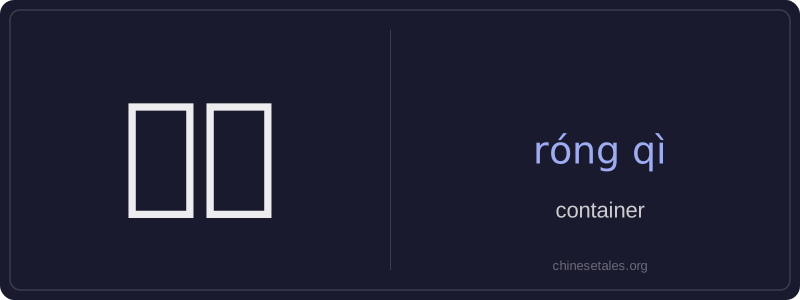
容器 (róng qì) literally combines 容 (róng), meaning 'to hold' or 'to contain', and 器 (qì), meaning 'utensil' or 'implement'. Together, they form a general term for any object designed to hold, store, or transport something—such as bottles, boxes, tanks, or bowls. It’s a neutral, formal noun commonly used in daily life, science, logistics, and manufacturing contexts.
Unlike more specific words like 瓶子 (bottle) or 盒子 (box), 容器 emphasizes function over form: the key idea is capacity and containment, not shape or material. It appears frequently in instructions ('Please use a clean container'), safety guidelines ('Store chemicals in a sealed container'), and technical descriptions ('The reactor contains a stainless-steel container'). It can refer to physical objects or, abstractly, to data structures in computing (e.g., 'container format').
Example Sentences
Related Words
国语
‘Guó yǔ’ literally means 'national language'—
无论谁
‘无论谁’ (wú lùn shéi) is a pronoun meaning
外语
‘外语’ literally means ‘outside language’ —
面条
‘面条’ (miàn tiáo) literally means ‘flour str
不对
不对 (bù duì) literally combines 不 (bù), meani
认为
‘认为’ (rèn wéi) is a transitive verb meaning
认同
‘认同’ (tóng rèn) is a verb meaning ‘to ident
中学
'Zhōngxué' literally combines 'zhōng' (middle)