Word Explanation
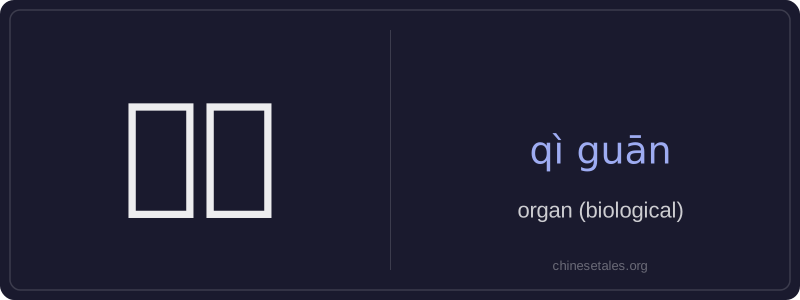
器官 (qì guān) literally combines 器 (qì), meaning 'vessel' or 'instrument', and 官 (guān), meaning 'official' or 'functionary'. Together, they metaphorically describe a specialized biological structure — like a 'functional unit' or 'working part' — that performs a specific task within a living body. This term is used exclusively in scientific, medical, and biological contexts to refer to structures such as the heart, lungs, liver, kidneys, and brain.
Unlike colloquial terms like 心 (xīn, 'heart') or 肺 (fèi, 'lung'), 器官 is formal and technical; it appears in textbooks, doctor-patient discussions, health reports, and biology lessons. It can refer to organs in humans, animals, and even plants (e.g., root, stem, leaf as plant organs), though human/animal usage is far more common in daily speech and media.
Example Sentences
Related Words
国语
‘Guó yǔ’ literally means 'national language'—
无论谁
‘无论谁’ (wú lùn shéi) is a pronoun meaning
外语
‘外语’ literally means ‘outside language’ —
面条
‘面条’ (miàn tiáo) literally means ‘flour str
不对
不对 (bù duì) literally combines 不 (bù), meani
认为
‘认为’ (rèn wéi) is a transitive verb meaning
认同
‘认同’ (tóng rèn) is a verb meaning ‘to ident
中学
'Zhōngxué' literally combines 'zhōng' (middle)