Word Explanation
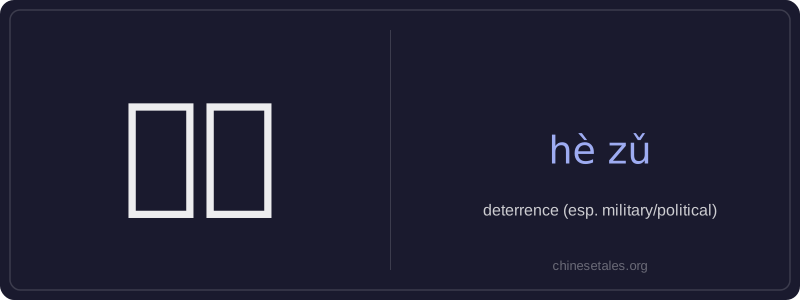
‘吓阻’ (hè zǔ) is a compound noun meaning ‘deterrence’—specifically the use of threat or force to prevent an adversary from taking undesirable action. The first character 吓 (hè) means ‘to frighten’ or ‘to intimidate’, while 阻 (zǔ) means ‘to obstruct’ or ‘to impede’. Together, they convey the idea of preventing action through intimidation—not necessarily actual violence, but the credible threat of it. This term is most commonly used in formal, strategic contexts such as national defense, international relations, and security policy.
Unlike general words for ‘prevention’ like 防止 (fángzhǐ), 吓阻 emphasizes psychological pressure and strategic signaling. It implies intentionality: the deterrent power must be visible and believable to the target. While occasionally used metaphorically (e.g., in law enforcement or corporate strategy), its core domain remains military and geopolitical discourse—similar to English ‘deterrence’ in phrases like ‘nuclear deterrence’ or ‘mutual assured destruction’.
Example Sentences
Related Words
国语
‘Guó yǔ’ literally means 'national language'—
无论谁
‘无论谁’ (wú lùn shéi) is a pronoun meaning
外语
‘外语’ literally means ‘outside language’ —
面条
‘面条’ (miàn tiáo) literally means ‘flour str
不对
不对 (bù duì) literally combines 不 (bù), meani
认为
‘认为’ (rèn wéi) is a transitive verb meaning
认同
‘认同’ (tóng rèn) is a verb meaning ‘to ident
中学
'Zhōngxué' literally combines 'zhōng' (middle)