Word Explanation
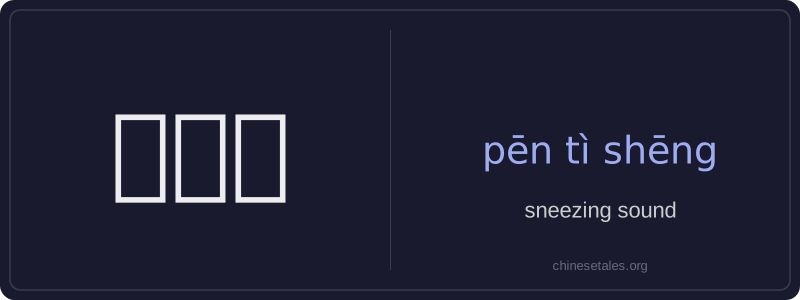
'Pēn tì shēng' literally combines three characters: 喷 (pēn, 'to spray' or 'to burst out'), 嚏 (tì, 'sneeze'), and 声 (shēng, 'sound' or 'voice'). Together, they form a compound noun meaning 'the sound of sneezing' — not the act itself, but specifically the audible noise produced when someone sneezes. It’s an onomatopoeic and descriptive term used in both spoken and written Chinese, often in contexts where attention is drawn to the sound rather than the physical action.
This word appears frequently in health-related discussions, children’s stories, medical descriptions, or everyday observations — for example, noting how loud or frequent someone’s sneezing sounds are. Unlike the verb 打喷嚏 (dǎ pēn tì, 'to sneeze'), 喷嚏声 functions only as a noun and cannot be used predicatively or with aspect markers like 了 or 过. It emphasizes auditory perception and is commonly modified by adjectives like 大 (dà, 'loud') or 小 (xiǎo, 'soft') to describe volume or quality.
Example Sentences
Related Words
国语
‘Guó yǔ’ literally means 'national language'—
无论谁
‘无论谁’ (wú lùn shéi) is a pronoun meaning
外语
‘外语’ literally means ‘outside language’ —
面条
‘面条’ (miàn tiáo) literally means ‘flour str
不对
不对 (bù duì) literally combines 不 (bù), meani
认为
‘认为’ (rèn wéi) is a transitive verb meaning
认同
‘认同’ (tóng rèn) is a verb meaning ‘to ident
中学
'Zhōngxué' literally combines 'zhōng' (middle)