Word Explanation
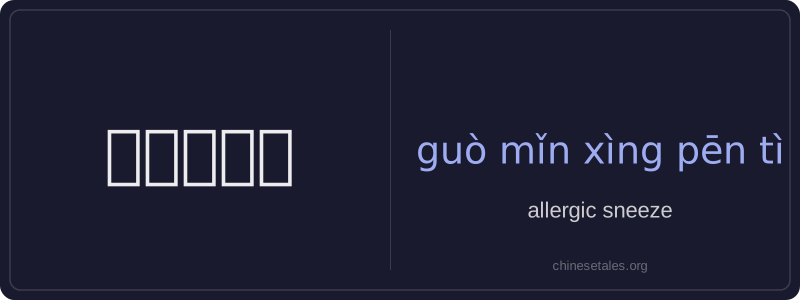
'Allergic sneeze' refers to a sneeze triggered by an allergic reaction — commonly to pollen, dust mites, pet dander, or mold. The term breaks down as: 过敏 (guòmǐn, 'allergy'), 性 (xìng, suffix meaning 'nature of' or 'characterized by'), and 喷嚏 (pēntì, 'sneeze'). Together, 过敏性喷嚏 literally means 'sneeze characterized by allergy' and is used medically and colloquially to distinguish allergy-induced sneezing from sneezing caused by colds or irritants like pepper.
This term appears frequently in health contexts — in doctor-patient conversations, allergy education materials, and over-the-counter medicine labels. It emphasizes the underlying immune response rather than just the physical act of sneezing. While not a formal medical diagnosis itself, it’s widely understood as shorthand for 'allergic rhinitis–related sneezing' and often co-occurs with symptoms like itchy eyes, runny nose, and nasal congestion.
Example Sentences
Related Words
国语
‘Guó yǔ’ literally means 'national language'—
无论谁
‘无论谁’ (wú lùn shéi) is a pronoun meaning
外语
‘外语’ literally means ‘outside language’ —
面条
‘面条’ (miàn tiáo) literally means ‘flour str
不对
不对 (bù duì) literally combines 不 (bù), meani
认为
‘认为’ (rèn wéi) is a transitive verb meaning
认同
‘认同’ (tóng rèn) is a verb meaning ‘to ident
中学
'Zhōngxué' literally combines 'zhōng' (middle)