Word Explanation
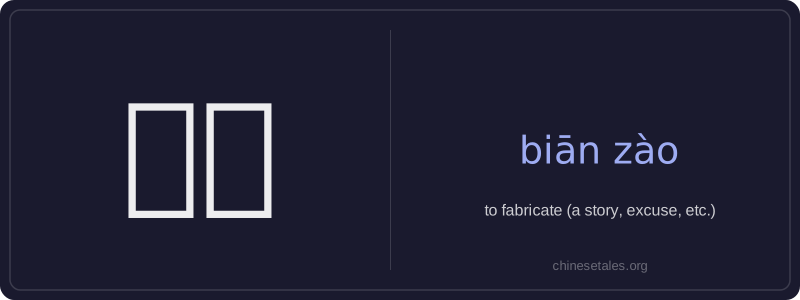
‘编造’ is a verb meaning to deliberately invent or fabricate something false—most commonly a story, excuse, alibi, or piece of information—with the intent to deceive. The character 编 (biān) originally means ‘to weave’ or ‘to compile’, suggesting the act of putting elements together deliberately; 造 (zào) means ‘to create’ or ‘to make’, often implying intentional construction. Together, 编造 carries a strong connotation of artificiality and dishonesty—not just imagination, but fabrication with misleading purpose.
This word is frequently used in contexts involving lies, official investigations, academic integrity, or everyday excuses. It’s neutral in formality but negative in tone: saying someone ‘编造借口’ (fabricated an excuse) implies criticism. It does not apply to harmless fantasy or creative writing—those use words like 编故事 (to make up a story) without the negative weight. The object of 编造 is typically abstract: stories, reasons, evidence, facts, or rumors—not physical objects.
Example Sentences
Related Words
国语
‘Guó yǔ’ literally means 'national language'—
无论谁
‘无论谁’ (wú lùn shéi) is a pronoun meaning
外语
‘外语’ literally means ‘outside language’ —
面条
‘面条’ (miàn tiáo) literally means ‘flour str
认同
‘认同’ (tóng rèn) is a verb meaning ‘to ident
违规
违规 (wéi guī) literally means 'to violate rules
亲笔
‘亲笔’ literally means ‘one’s own hand’—comb
不对
不对 (bù duì) literally combines 不 (bù), meani