Word Explanation
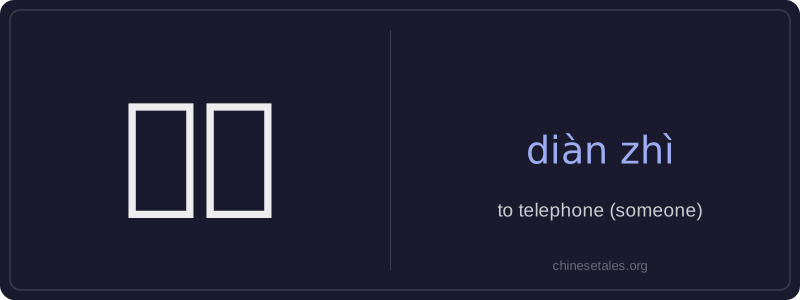
致電 (zhì diàn) is a formal or semi-formal verb meaning 'to telephone (someone)'. It literally combines 致 (zhì), meaning 'to deliver, to send, or to direct', and 电 (diàn), meaning 'electricity' or 'telecommunication'. Together, they evoke the idea of 'sending an electric message' — a concise, elegant way to refer to making a phone call. Unlike the more colloquial 打电话 (dǎ diànhuà), 致電 carries a tone of professionalism, courtesy, or written formality.
This term appears frequently in business correspondence, official notices, news reports, and formal emails — for example, when confirming appointments or relaying urgent information. It is almost always followed by a person or organization (e.g., 致電客户, 致電公司), and never used intransitively (you cannot say '我致電了' without specifying whom). While grammatically correct in spoken Chinese, it sounds noticeably stiff in casual conversation, where 打电话 or 给…打电话 are preferred.
Example Sentences
Related Words
国语
‘Guó yǔ’ literally means 'national language'—
无论谁
‘无论谁’ (wú lùn shéi) is a pronoun meaning
外语
‘外语’ literally means ‘outside language’ —
面条
‘面条’ (miàn tiáo) literally means ‘flour str
认同
‘认同’ (tóng rèn) is a verb meaning ‘to ident
违规
违规 (wéi guī) literally means 'to violate rules
亲笔
‘亲笔’ literally means ‘one’s own hand’—comb
不对
不对 (bù duì) literally combines 不 (bù), meani