Word Explanation
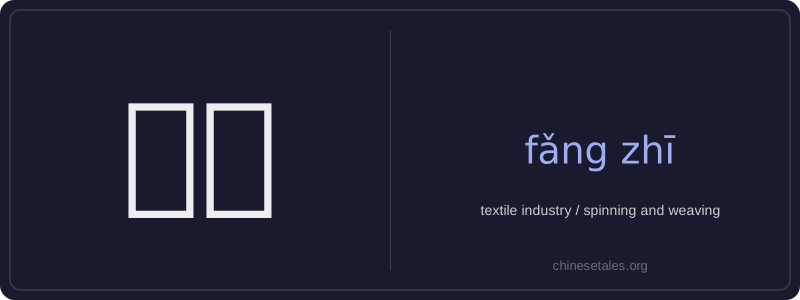
纺织 (fǎng zhī) literally combines 纺 (fǎng), meaning 'to spin' — as in twisting fibers into yarn — and 织 (zhī), meaning 'to weave' — interlacing yarns to form fabric. Together, the term refers broadly to the textile industry as a whole, encompassing spinning, weaving, dyeing, finishing, and garment production. It is commonly used in formal, economic, or industrial contexts, such as government reports, company names, or academic discussions about manufacturing sectors.
In everyday speech, 纺织 is rarely used alone as a verb; instead, it functions almost exclusively as a noun modifier or compound noun — for example, in 纺织厂 (textile factory), 纺织业 (textile industry), or 纺织品 (textiles). While historically rooted in handcraft, today it evokes large-scale industrial activity and is often associated with China’s export-driven manufacturing economy, particularly in regions like Zhejiang and Guangdong.
Example Sentences
Related Words
国语
‘Guó yǔ’ literally means 'national language'—
无论谁
‘无论谁’ (wú lùn shéi) is a pronoun meaning
外语
‘外语’ literally means ‘outside language’ —
面条
‘面条’ (miàn tiáo) literally means ‘flour str
认同
‘认同’ (tóng rèn) is a verb meaning ‘to ident
违规
违规 (wéi guī) literally means 'to violate rules
亲笔
‘亲笔’ literally means ‘one’s own hand’—comb
不对
不对 (bù duì) literally combines 不 (bù), meani