Word Explanation
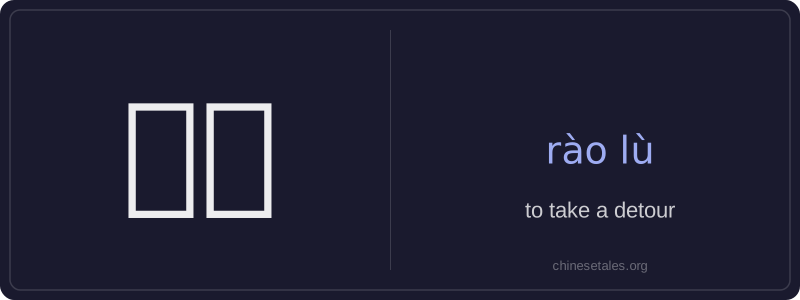
'Rào lù' literally combines 绕 (rào, 'to circle around' or 'to go around') and 路 (lù, 'road' or 'route'). Together, it means 'to take a detour' — intentionally choosing an alternate path instead of going straight to one’s destination. It implies deviation due to obstacles, closures, traffic, or personal preference, and often carries a neutral or slightly pragmatic connotation.
This verb is commonly used in everyday navigation contexts — whether giving directions, explaining delays, or describing travel decisions. It can be used transitively (e.g., 绕路去超市) or intransitively (e.g., 我们今天得绕路), and frequently appears with time or reason markers like 因为、所以, or 要. Unlike more formal terms like 改道, 绕路 is conversational and widely understood across age groups and regions.
Example Sentences
Related Words
国语
‘Guó yǔ’ literally means 'national language'—
无论谁
‘无论谁’ (wú lùn shéi) is a pronoun meaning
外语
‘外语’ literally means ‘outside language’ —
面条
‘面条’ (miàn tiáo) literally means ‘flour str
认同
‘认同’ (tóng rèn) is a verb meaning ‘to ident
违规
违规 (wéi guī) literally means 'to violate rules
亲笔
‘亲笔’ literally means ‘one’s own hand’—comb
不对
不对 (bù duì) literally combines 不 (bù), meani