Word Explanation
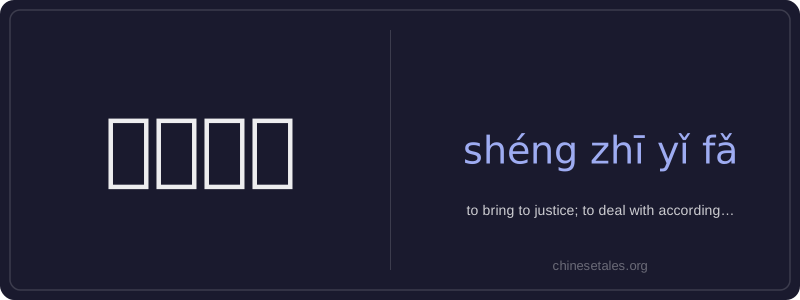
‘绳之以法’ is a formal, literary idiom meaning ‘to bring someone to justice’ or ‘to deal with someone according to the law’. Literally, it breaks down as: 绳 (shéng) means ‘to bind’ or ‘to restrain’, often used metaphorically for ‘holding accountable’; 之 (zhī) is a pronoun meaning ‘him/her/it’; 以 (yǐ) is a preposition meaning ‘by means of’ or ‘with’; and 法 (fǎ) means ‘law’ or ‘legal system’. Together, the phrase evokes the image of binding a wrongdoer with the law — that is, subjecting them to legal consequences.
This expression is commonly used in news reports, official statements, judicial contexts, and formal writing. It implies that wrongdoing has been confirmed and that lawful punishment or due process will follow. While powerful and concise, it is rarely used in casual speech — it carries weight and seriousness, often appearing after evidence has been gathered or a verdict reached.
Example Sentences
Related Words
国语
‘Guó yǔ’ literally means 'national language'—
无论谁
‘无论谁’ (wú lùn shéi) is a pronoun meaning
外语
‘外语’ literally means ‘outside language’ —
面条
‘面条’ (miàn tiáo) literally means ‘flour str
认同
‘认同’ (tóng rèn) is a verb meaning ‘to ident
违规
违规 (wéi guī) literally means 'to violate rules
亲笔
‘亲笔’ literally means ‘one’s own hand’—comb
不对
不对 (bù duì) literally combines 不 (bù), meani