Word Explanation
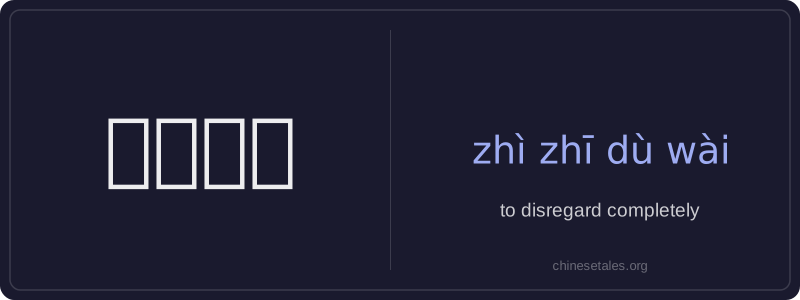
‘置之度外’ is a classical four-character idiom meaning 'to disregard completely' or 'to pay no attention to something, especially something that would normally cause concern.' Literally, it breaks down as: 置 (to place), 之 (a pronoun meaning 'it' or 'that'), 度 (to consider, to measure mentally), and 外 (outside). So the phrase conveys the idea of placing something outside the scope of one’s consideration—effectively ignoring it as if it doesn’t exist or matter.
This idiom is often used in formal or literary contexts, especially when describing someone who sets aside personal safety, gain, or emotion for a higher purpose—like duty, principle, or altruism. It carries a positive, admirable connotation when applied to selfless action, but can be neutral or even critical depending on context (e.g., neglecting responsibility). It typically follows subject–verb structure and often appears after subjects like 他, 我们, or leaders, with the object being abstract—such as danger, cost, or personal loss.
Example Sentences
Related Words
国语
‘Guó yǔ’ literally means 'national language'—
无论谁
‘无论谁’ (wú lùn shéi) is a pronoun meaning
外语
‘外语’ literally means ‘outside language’ —
面条
‘面条’ (miàn tiáo) literally means ‘flour str
认同
‘认同’ (tóng rèn) is a verb meaning ‘to ident
违规
违规 (wéi guī) literally means 'to violate rules
亲笔
‘亲笔’ literally means ‘one’s own hand’—comb
不对
不对 (bù duì) literally combines 不 (bù), meani