Word Explanation
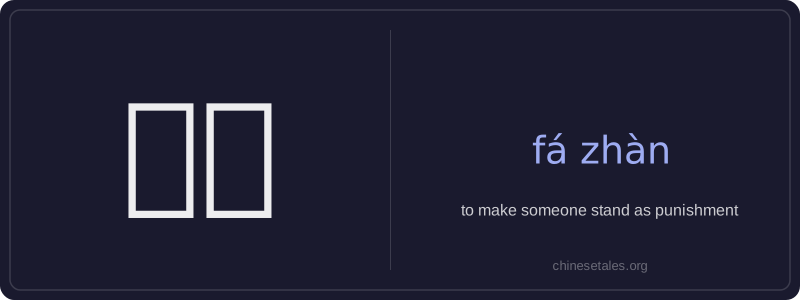
罚站 literally means 'punishment standing' — it refers to the disciplinary practice of requiring someone, usually a student or child, to stand upright in a fixed spot (often in front of the class or in a corner) for a set period as a consequence for misbehavior. The character 罚 (fá) means 'to punish', while 站 (zhàn) means 'to stand'; together, they form a compound noun and verb describing this specific, culturally common form of non-physical discipline in Chinese schools and families.
This practice is widely recognized in Chinese educational settings and everyday parenting, often viewed as a mild but effective way to instill discipline and accountability. Though less common in Western classrooms, 罚站 carries no strong negative connotation in Chinese — it’s neutral or even slightly formal in tone, and rarely implies humiliation unless prolonged or applied unfairly. It’s typically used with verbs like '被' (bèi, 'to be subjected to') or '要' (yào, 'must'), and often appears in past-tense narratives about childhood or school life.
Example Sentences
Related Words
国语
‘Guó yǔ’ literally means 'national language'—
无论谁
‘无论谁’ (wú lùn shéi) is a pronoun meaning
外语
‘外语’ literally means ‘outside language’ —
面条
‘面条’ (miàn tiáo) literally means ‘flour str
认同
‘认同’ (tóng rèn) is a verb meaning ‘to ident
违规
违规 (wéi guī) literally means 'to violate rules
亲笔
‘亲笔’ literally means ‘one’s own hand’—comb
不对
不对 (bù duì) literally combines 不 (bù), meani