Word Explanation
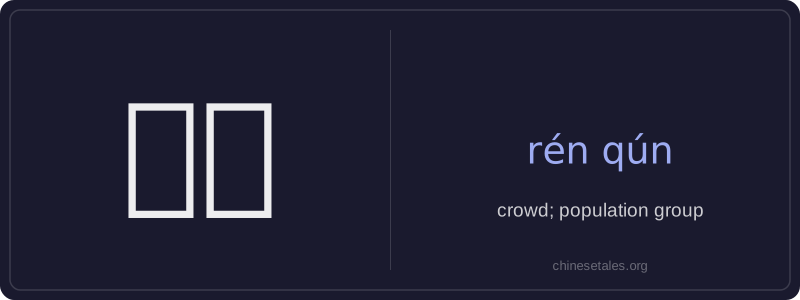
人群 (rén qún) literally combines 人 (rén), meaning 'person', and 群 (qún), meaning 'group' or 'flock'. Together, they refer to a collection of people gathered in one place—typically implying density, movement, or shared context, such as shoppers in a mall or commuters on a platform. Unlike the more neutral term 人们 (rénmen, 'people'), 人群 carries a visual, spatial connotation: you can see, move through, or get lost in a 人群.
This word is commonly used in descriptive, observational, or narrative contexts—especially when emphasizing physical presence, anonymity, or collective behavior. It appears frequently in news reports, travel writing, and everyday conversation about public spaces. While it can occasionally refer to a demographic group (e.g., 'youth population group'), this usage is less common and usually requires clarification with modifiers like 年轻人人群 (niánqīng rén rén qún). In most cases, 人群 means 'crowd'—a dynamic, often bustling assembly of individuals.
Example Sentences
Related Words
国语
‘Guó yǔ’ literally means 'national language'—
无论谁
‘无论谁’ (wú lùn shéi) is a pronoun meaning
外语
‘外语’ literally means ‘outside language’ —
面条
‘面条’ (miàn tiáo) literally means ‘flour str
认同
‘认同’ (tóng rèn) is a verb meaning ‘to ident
违规
违规 (wéi guī) literally means 'to violate rules
亲笔
‘亲笔’ literally means ‘one’s own hand’—comb
不对
不对 (bù duì) literally combines 不 (bù), meani