Word Explanation
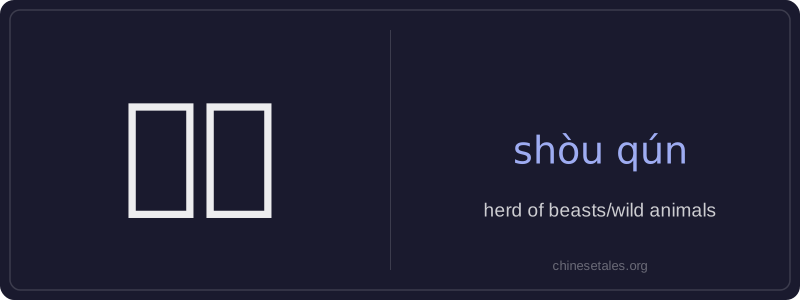
‘兽群’ literally combines 兽 (shòu), meaning 'beast' or 'wild animal', and 群 (qún), meaning 'group' or 'flock'. Together, it refers specifically to a naturally occurring group of wild animals—especially large mammals like deer, elephants, or wolves—that move or live together. Unlike generic terms for animal groups (e.g., 群), 兽群 carries an implicit sense of wilderness, untamed behavior, and ecological context; it’s rarely used for domesticated animals or birds.
This term appears frequently in nature documentaries, wildlife writing, and ecological reports. It evokes imagery of movement across open landscapes—migrating herds, grazing on plains, or fleeing predators. While grammatically similar to other collective nouns ending in 群 (e.g., 鱼群, 鸟群), 兽群 is semantically restricted to terrestrial, non-domesticated mammals and occasionally large reptiles or carnivores. It is neutral in register but leans formal or literary; you won’t hear it in casual daily speech about pets or farm animals.
Example Sentences
Related Words
国语
‘Guó yǔ’ literally means 'national language'—
无论谁
‘无论谁’ (wú lùn shéi) is a pronoun meaning
外语
‘外语’ literally means ‘outside language’ —
面条
‘面条’ (miàn tiáo) literally means ‘flour str
认同
‘认同’ (tóng rèn) is a verb meaning ‘to ident
违规
违规 (wéi guī) literally means 'to violate rules
亲笔
‘亲笔’ literally means ‘one’s own hand’—comb
不对
不对 (bù duì) literally combines 不 (bù), meani