Word Explanation
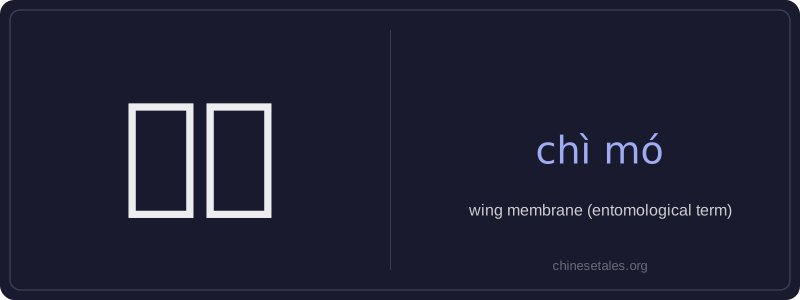
翅膜 (chì mó) is a technical noun used primarily in entomology to refer to the thin, transparent, membranous tissue that forms the main surface of an insect’s wing — such as those of dragonflies, bees, or wasps. The character 翅 means 'wing', while 膜 means 'membrane' or 'thin flexible layer', so the compound literally means 'wing membrane'. It emphasizes structural composition rather than function or motion.
This term appears mainly in scientific descriptions, biology textbooks, and nature documentaries about insects. It is not used in everyday conversation and rarely occurs outside academic or educational contexts. Unlike general terms like 翅膀 (chìbǎng, 'wing'), which refers to the whole organ, 翅膜 specifically denotes the delicate, veined, translucent part essential for flight mechanics and aerodynamic efficiency.
Example Sentences
Related Words
国语
‘Guó yǔ’ literally means 'national language'—
无论谁
‘无论谁’ (wú lùn shéi) is a pronoun meaning
外语
‘外语’ literally means ‘outside language’ —
面条
‘面条’ (miàn tiáo) literally means ‘flour str
认同
‘认同’ (tóng rèn) is a verb meaning ‘to ident
违规
违规 (wéi guī) literally means 'to violate rules
亲笔
‘亲笔’ literally means ‘one’s own hand’—comb
不对
不对 (bù duì) literally combines 不 (bù), meani