Word Explanation
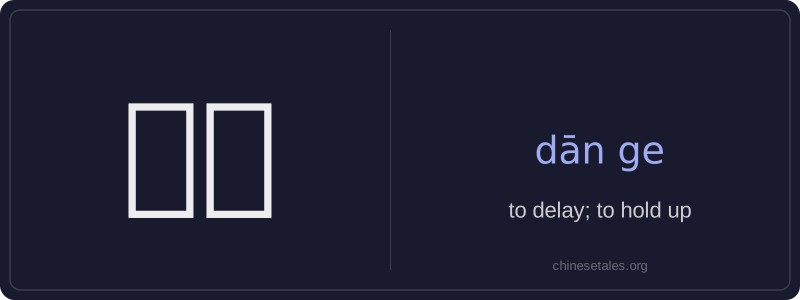
耽搁 (dān ge) is a verb meaning 'to delay' or 'to hold up' — typically referring to an unplanned or unwanted interruption that causes something to take longer than expected. The first character 耽 (dān) originally means 'to indulge' or 'to linger', suggesting lingering too long; the second character 搁 (ge) means 'to put aside' or 'to set down', implying something has been paused or set aside. Together, they convey the idea of being stalled or sidetracked, often due to external factors like traffic, bureaucracy, or miscommunication.
This word is commonly used in spoken and written Mandarin when explaining why plans changed or deadlines were missed. It carries a slightly negative or apologetic tone — for example, someone might say '抱歉,耽搁您时间了' ('Sorry for taking up your time') as a polite apology. It’s not used for intentional delays (e.g., 'I delayed my trip on purpose'), nor for abstract or emotional states — it refers specifically to concrete interruptions affecting schedules or progress.
Example Sentences
Related Words
国语
‘Guó yǔ’ literally means 'national language'—
无论谁
‘无论谁’ (wú lùn shéi) is a pronoun meaning
外语
‘外语’ literally means ‘outside language’ —
面条
‘面条’ (miàn tiáo) literally means ‘flour str
认同
‘认同’ (tóng rèn) is a verb meaning ‘to ident
违规
违规 (wéi guī) literally means 'to violate rules
亲笔
‘亲笔’ literally means ‘one’s own hand’—comb
不对
不对 (bù duì) literally combines 不 (bù), meani