Word Explanation
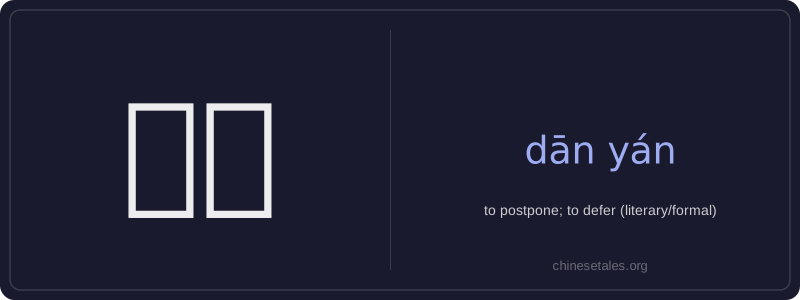
耽延 is a formal, literary verb meaning 'to postpone' or 'to defer'—often implying an unnecessary or regrettable delay. The first character 耽 (dān) originally means 'to indulge in' or 'to linger', suggesting absorption or distraction; the second character 延 (yán) means 'to extend' or 'to prolong'. Together, they evoke the idea of letting time slip by due to hesitation, distraction, or reluctance—more nuanced than neutral terms like 推迟. It appears frequently in classical texts, official documents, and formal speeches, but rarely in casual conversation.
This word carries a subtle negative connotation: the delay is often seen as avoidable, unwise, or even irresponsible. It’s commonly used with abstract nouns like 要事 (important matters), 行程 (itinerary), or 决定 (decision), and typically takes a direct object or appears in passive or causative constructions. Because of its elevated register, learners should avoid using it in emails to friends or spoken requests—opt instead for 推迟 or 拖延 in informal settings.
Example Sentences
Related Words
国语
‘Guó yǔ’ literally means 'national language'—
无论谁
‘无论谁’ (wú lùn shéi) is a pronoun meaning
外语
‘外语’ literally means ‘outside language’ —
面条
‘面条’ (miàn tiáo) literally means ‘flour str
认同
‘认同’ (tóng rèn) is a verb meaning ‘to ident
违规
违规 (wéi guī) literally means 'to violate rules
亲笔
‘亲笔’ literally means ‘one’s own hand’—comb
不对
不对 (bù duì) literally combines 不 (bù), meani