Word Explanation
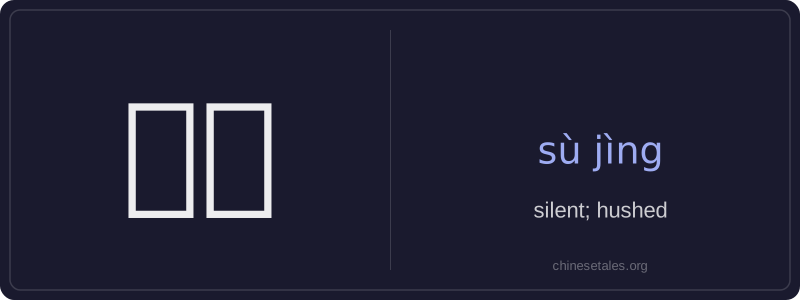
肃静 (sù jìng) is an adjective meaning 'silent' or 'hushed', conveying a deep, respectful quiet—often implying stillness that arises from solemnity, reverence, or strict discipline. The first character 肃 (sù) means 'solemn', 'serious', or 'reverent', while 静 (jìng) means 'quiet' or 'still'. Together, they form a compound that emphasizes not just absence of noise but an atmosphere of dignified calm, frequently associated with formal or sacred settings like temples, libraries, courtrooms, or memorial ceremonies.
This word is more formal and literary than everyday terms like 安静 (ān jìng). It’s commonly used in written language, official announcements ('请保持肃静'), or instructions in solemn spaces. Unlike casual silence, 肃静 carries a sense of collective self-restraint and respect—it’s the kind of quiet people maintain when entering a shrine or during a moment of national remembrance.
Example Sentences
Related Words
国语
‘Guó yǔ’ literally means 'national language'—
无论谁
‘无论谁’ (wú lùn shéi) is a pronoun meaning
外语
‘外语’ literally means ‘outside language’ —
面条
‘面条’ (miàn tiáo) literally means ‘flour str
认同
‘认同’ (tóng rèn) is a verb meaning ‘to ident
违规
违规 (wéi guī) literally means 'to violate rules
亲笔
‘亲笔’ literally means ‘one’s own hand’—comb
不对
不对 (bù duì) literally combines 不 (bù), meani