Word Explanation
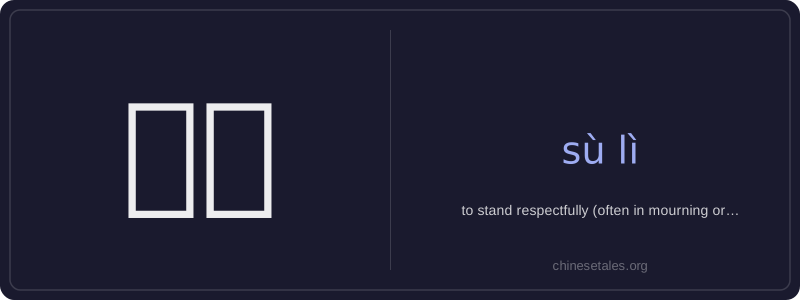
肃立 (sù lì) is a compound verb meaning 'to stand respectfully' — typically in solemn, reverent, or mournful situations. The first character 肃 (sù) conveys seriousness, solemnity, and reverence, often associated with discipline or mourning; the second character 立 (lì) means 'to stand'. Together, they describe not just physical posture but a deliberate, dignified stance reflecting deep respect, grief, or awe. This word emphasizes both the physical act of standing upright and the internal attitude of reverence.
It is commonly used during memorial ceremonies, national observances (e.g., moments of silence), funerals, or when honoring heroes or historical figures. Unlike casual standing (站, zhàn), 肃立 implies stillness, silence, and emotional gravity — one stands motionless, head slightly bowed or gaze lowered, shoulders back, hands at sides. It’s frequently paired with phrases like '默哀' (mò’āi, observe a moment of silence) or '致哀' (zhì’āi, express condolences), reinforcing its ceremonial and emotionally charged nature.
Example Sentences
Related Words
国语
‘Guó yǔ’ literally means 'national language'—
无论谁
‘无论谁’ (wú lùn shéi) is a pronoun meaning
外语
‘外语’ literally means ‘outside language’ —
面条
‘面条’ (miàn tiáo) literally means ‘flour str
认同
‘认同’ (tóng rèn) is a verb meaning ‘to ident
违规
违规 (wéi guī) literally means 'to violate rules
亲笔
‘亲笔’ literally means ‘one’s own hand’—comb
不对
不对 (bù duì) literally combines 不 (bù), meani