Word Explanation
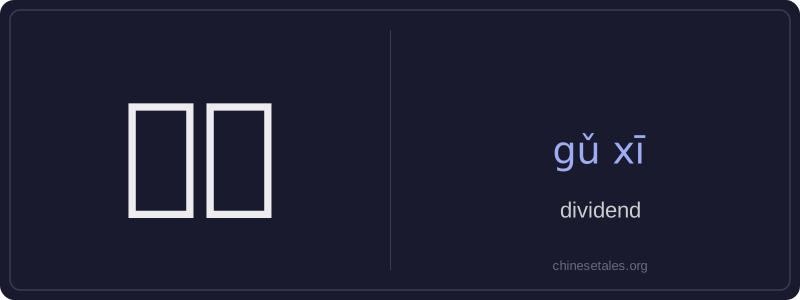
'股息' (gǔ xī) literally combines '股' (gǔ), meaning 'share' or 'stock', and '息' (xī), meaning 'interest' or 'yield'. Together, they refer to the portion of a company's profits distributed to shareholders, commonly known in English as a 'dividend'. It is a formal financial term used in banking, investment reports, stock market discussions, and corporate announcements. Unlike informal terms for profit or income, 股息 specifically denotes periodic payments made to equity owners—usually in cash or additional shares—and reflects a company’s profitability and dividend policy.
This word appears frequently in financial news, annual reports, and personal finance contexts—for example, when investors compare dividend yields across stocks or assess passive income streams. It is neutral in register but leans formal; you won’t hear it in casual conversation unless discussing investments. Note that 股息 is uncountable in Chinese and does not take measure words like '个'; instead, it’s quantified with phrases like '每股股息' (dividend per share) or '年度股息' (annual dividend).
Example Sentences
Related Words
国语
‘Guó yǔ’ literally means 'national language'—
无论谁
‘无论谁’ (wú lùn shéi) is a pronoun meaning
外语
‘外语’ literally means ‘outside language’ —
面条
‘面条’ (miàn tiáo) literally means ‘flour str
认同
‘认同’ (tóng rèn) is a verb meaning ‘to ident
违规
违规 (wéi guī) literally means 'to violate rules
亲笔
‘亲笔’ literally means ‘one’s own hand’—comb
不对
不对 (bù duì) literally combines 不 (bù), meani