Word Explanation
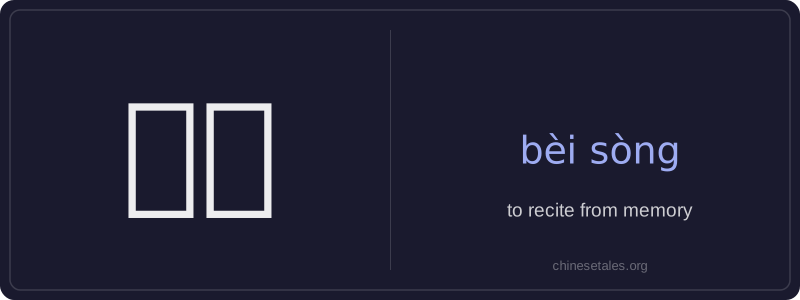
背诵 (bèi sòng) means 'to recite from memory' — that is, to say aloud something you have memorized, such as a poem, passage, or list of vocabulary. The character 背 (bèi) originally means 'back', but here it carries the extended meaning of 'to carry in one’s mind' or 'to memorize thoroughly'. The character 诵 (sòng) means 'to recite aloud', often with rhythm or expression. Together, they emphasize both internalization and vocal reproduction — not just remembering silently, but being able to deliver the material fluently and accurately.
This verb is commonly used in educational contexts: students 背诵 texts for language class, classical poems in Chinese literature, or key formulas in science. It implies active, repeated practice rather than passive reading. While often associated with schoolwork, adults may also 背诵 speeches, oaths, or religious verses. It's a formal, neutral term — neither slang nor overly literary — and appears frequently in textbooks, exams, and teaching materials.
Example Sentences
Related Words
国语
‘Guó yǔ’ literally means 'national language'—
无论谁
‘无论谁’ (wú lùn shéi) is a pronoun meaning
外语
‘外语’ literally means ‘outside language’ —
面条
‘面条’ (miàn tiáo) literally means ‘flour str
认同
‘认同’ (tóng rèn) is a verb meaning ‘to ident
违规
违规 (wéi guī) literally means 'to violate rules
亲笔
‘亲笔’ literally means ‘one’s own hand’—comb
不对
不对 (bù duì) literally combines 不 (bù), meani