Word Explanation
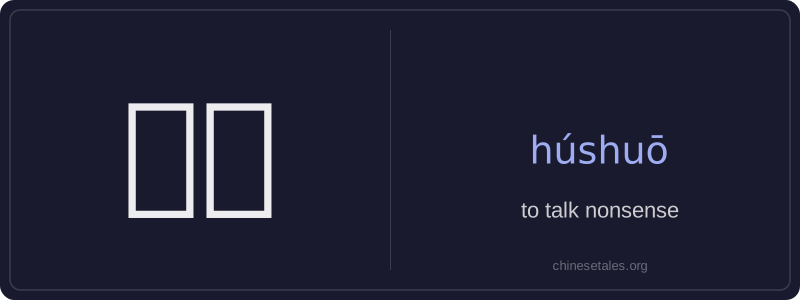
胡说 literally combines 胡 (hú), historically referring to non-Han 'barbarian' groups from the north and west, and 说 (shuō), meaning 'to speak'. Over time, 胡 acquired connotations of 'unrestrained', 'irrational', or 'nonsensical', so 胡说 means 'to talk nonsense' — speech that is baseless, absurd, illogical, or deliberately false. It’s often used to dismiss something as ridiculous or untrue.
This word carries a strong tone of disapproval or impatience and is common in informal spoken Chinese. It can stand alone as a verb ('Don’t talk nonsense!') or appear with objects ('He’s just胡说') or modifiers ('pure nonsense'). While it may sound playful among friends, it can be blunt or even rude when directed at authority figures or in formal settings. It’s rarely used in writing except in dialogue or journalistic quotes conveying strong skepticism.
Example Sentences
Related Words
国语
‘Guó yǔ’ literally means 'national language'—
无论谁
‘无论谁’ (wú lùn shéi) is a pronoun meaning
外语
‘外语’ literally means ‘outside language’ —
面条
‘面条’ (miàn tiáo) literally means ‘flour str
认同
‘认同’ (tóng rèn) is a verb meaning ‘to ident
短袜
‘短袜’ (duǎn wà) literally means ‘short sock
违规
违规 (wéi guī) literally means 'to violate rules
亲笔
‘亲笔’ literally means ‘one’s own hand’—comb